Fast, no code setup
Increase sales on autopilot

Mobile push notifications can turn a branded app into an active loyalty channel instead of a passive icon on someone’s phone. When your messages are timely, relevant, and tied to real member value, they help bring customers back, increase repeat purchases, and strengthen long-term engagement. The key is not sending more notifications. It is sending the right notification to the right person at the right moment.
For loyalty-driven brands, push notifications work especially well because they support habits that already matter to retention: checking rewards, responding to offers, completing challenges, redeeming perks, and returning after inactivity. Used well, they connect customer data, app behavior, and loyalty mechanics in a way that feels useful rather than disruptive.
Why mobile push notifications matter for customer loyalty
Customer loyalty is built through repeated positive interactions. Mobile push notifications support those interactions in real time, even when the app is not open. That makes them valuable for retention, re-engagement, and loyalty program participation.
Unlike slower channels, push notifications can respond to customer behavior as it happens. A member can receive a reminder about an unredeemed reward, a message about a tier upgrade, or a prompt to return after a period of inactivity. These are not just promotional messages. They are loyalty touchpoints that reinforce value and keep your brand top of mind.
They encourage repeat app visits
They make rewards and loyalty benefits more visible
They support timely reactivation
They help customers act on offers faster
They create a more connected app experience
How push notifications improve loyalty across the customer journey
The strongest loyalty strategies use push notifications across more than one moment. Instead of relying only on promotions, you can support onboarding, engagement, reward redemption, and retention over time.
Onboarding and first value
Early app engagement has a major effect on long-term retention. A new member who understands how to earn points, unlock rewards, or join a challenge is more likely to return. Push notifications can guide that first phase with short, useful nudges.
Examples include welcoming a new member, highlighting their first available reward, or reminding them to complete a profile step that unlocks benefits.
Active engagement and repeat visits
Once customers are active, push notifications help maintain momentum. You can announce new challenges, remind members about expiring benefits, or share relevant updates based on recent activity. This keeps the loyalty program visible without forcing customers to search for value inside the app.
Retention and reactivation
When activity drops, mobile push notifications can bring customers back with targeted reminders. Inactivity messages, tier-loss warnings, or updates about available rewards can create a strong reason to re-engage. This is where customer loyalty messaging becomes especially effective, because the message is tied to something the member may lose or gain.
What makes a loyalty push notification effective
Most loyalty notifications fail for one of two reasons: they are too generic, or they arrive without a clear reason. Effective messages are built around context, timing, and value.
Relevance
The notification should connect to something the customer cares about right now. That could be a nearby location, a new reward, a birthday perk, or a challenge they already started.
Clear value
Every notification should answer one question fast: why should I tap this? If the benefit is vague, the message will be ignored.
Strong timing
Even a good message underperforms when it lands at the wrong moment. Timing should reflect user behavior, local routines, and the urgency of the message.
Low friction
The tap should lead directly to the right app screen. Deep links matter because they reduce effort and help turn attention into action.
Segmentation and personalization for better retention
Segmentation is one of the biggest differences between average push campaigns and loyalty-focused mobile engagement. Loyalty members are not all in the same stage, and they should not receive the same messaging.
You can segment based on purchase behavior, app activity, location, loyalty status, reward usage, or engagement history. That makes it easier to match the message to the member’s current relationship with the brand.
Useful loyalty segments often include:
New members who have not redeemed a reward yet
Active members close to a tier upgrade
Members with unredeemed rewards
Users who have been inactive for a defined period
Customers who respond well to certain offer categories
Members who referred a friend or completed a challenge
Personalized loyalty experiences can go further than using a first name. It can reflect real loyalty context, such as available points, reward progress, challenge completion, or a relevant birthday incentive. This makes the message feel earned and useful, which is exactly what supports customer loyalty.
Best use cases for mobile push notifications in loyalty programs
The most effective loyalty notifications are tied to real member actions and real program value. These use cases are especially relevant for brands with a loyalty app or white-label loyalty platform.
Reward availability reminders
Let members know when they have a reward ready to claim or redeem. This reduces missed value and increases repeat visits.
Unredeemed reward follow-ups
If a member earned a reward but has not used it, a well-timed reminder can recover intent and drive action.
Challenge and mission updates
Push notifications work well for gamified loyalty. You can remind members to complete a challenge, show progress, or announce a newly unlocked reward.
Tier upgrades and tier-loss warnings
Status-based loyalty messaging can be highly effective because it creates a clear next step. Members can be notified when they move up a tier or when they need to act to keep their current status.
Birthday messages
Birthday campaigns often perform well because they feel personal and expected. A birthday reward or member-only benefit can increase both goodwill and redemption.
Referral success messages
When a referral is completed, a push notification can immediately confirm success and reinforce the benefit of participating in the program.
Inactivity win-back notifications
If a member has not engaged for a defined time, you can send a message tied to a reward, a seasonal reason to return, or a loyalty status reminder.
Operational and availability alerts
Some loyalty apps go beyond rewards. If your app supports booking or member access features, instant alerts can be highly valuable. A good example is a court availability alert that lets members know the moment a slot opens up.
Timing, frequency, and notification fatigue
Strong mobile push notifications for customer loyalty depend as much on restraint as on creativity. Sending too many messages reduces trust and increases opt-outs. Sending too few means customers forget the app exists.
A practical approach is to align frequency with customer value rather than campaign volume. Transactional or behavior-triggered notifications usually feel more relevant than generic blasts because they are tied to something the user actually did or earned.
To reduce notification fatigue:
Prioritize triggered messages over broad sends
Set frequency limits per user
Avoid repeating the same offer too often
Let users control notification preferences when possible
Review open rates, clicks, and opt-outs regularly
Timing also matters. A lunchtime offer, a same-day reward reminder, or a message tied to a recent visit is more likely to perform than a generic notification sent at random. The best send time depends on the audience, so testing matters more than assumptions.
Content and CTA best practices for loyalty notifications
Push notification copy needs to be short, clear, and action-oriented. On mobile, attention is limited. That means every word has to support the click.
What good loyalty push copy usually includes
A clear benefit
A reason to act now
A specific next step
Language that matches the loyalty context
Examples of stronger loyalty-oriented CTA angles
Redeem your reward
Unlock your next perk
Complete your challenge
Claim your birthday gift
Keep your tier status
Book the open spot
Short copy often performs best, but short does not mean vague. If the member has a reward, say so. If a challenge is nearly complete, say that. Specificity improves taps because it reduces uncertainty.
Triggered notifications vs manual campaigns
Both manual and automated notifications have a role in a loyalty app. The difference is in when and why you send them.
Manual notifications
Manual campaigns are useful for one-off updates such as a limited-time promotion, a brand event, or a special announcement to a selected segment. They give teams direct control and are helpful when speed matters.
Behavior-triggered notifications
Triggered notifications are more scalable for retention because they respond automatically to customer actions or milestones. That could include earning a reward, becoming inactive, reaching a tier threshold, or leaving a benefit unused.
For loyalty, triggered notifications often drive more consistent engagement because they are tied to a clear member event instead of a generic broadcast.
How mobile push notifications fit into an omnichannel loyalty strategy
Push notifications are powerful, but they work best as part of a broader loyalty communication strategy. Some messages are ideal for mobile immediacy, while others may be better supported by email, SMS, or in-app messaging.
For example, a push notification can drive immediate attention to a new reward, while the app itself explains the details. An email can support a larger campaign, but the push message can create the quick return visit. This channel combination helps improve visibility without depending on a single touchpoint.
The main role of mobile push notifications in customer loyalty is speed and relevance. They are especially effective when:
The message is time-sensitive
The member already uses the app
The goal is to drive a quick return action
The notification can deep link into a specific loyalty screen
For brands building broader mobile-first loyalty strategies, push works best when it complements other retention channels rather than replacing them.
How to measure push notification performance for loyalty
If you want better retention, you need to measure more than opens. Open rate can show message appeal, but customer loyalty depends on what happens after the tap.
Useful metrics include:
Open rate
Click-through rate
Reward redemption rate
Repeat app sessions
Challenge completion rate
Reactivation rate for inactive users
Retention by segment
Opt-out rate
It is also useful to compare manual campaigns with automated flows. A broad message may produce more total clicks, while a triggered loyalty message may drive better retention outcomes per user. Both can matter, but they should be evaluated against the right goal. Measuring these outcomes with loyalty analytics helps tie notification performance back to retention and engagement.
How Authic supports loyalty-focused push notifications
Authic includes mobile push notifications as part of its white-label loyalty platform and branded loyalty apps. That means notifications are not treated as a separate add-on channel, but as a built-in part of the loyalty experience.
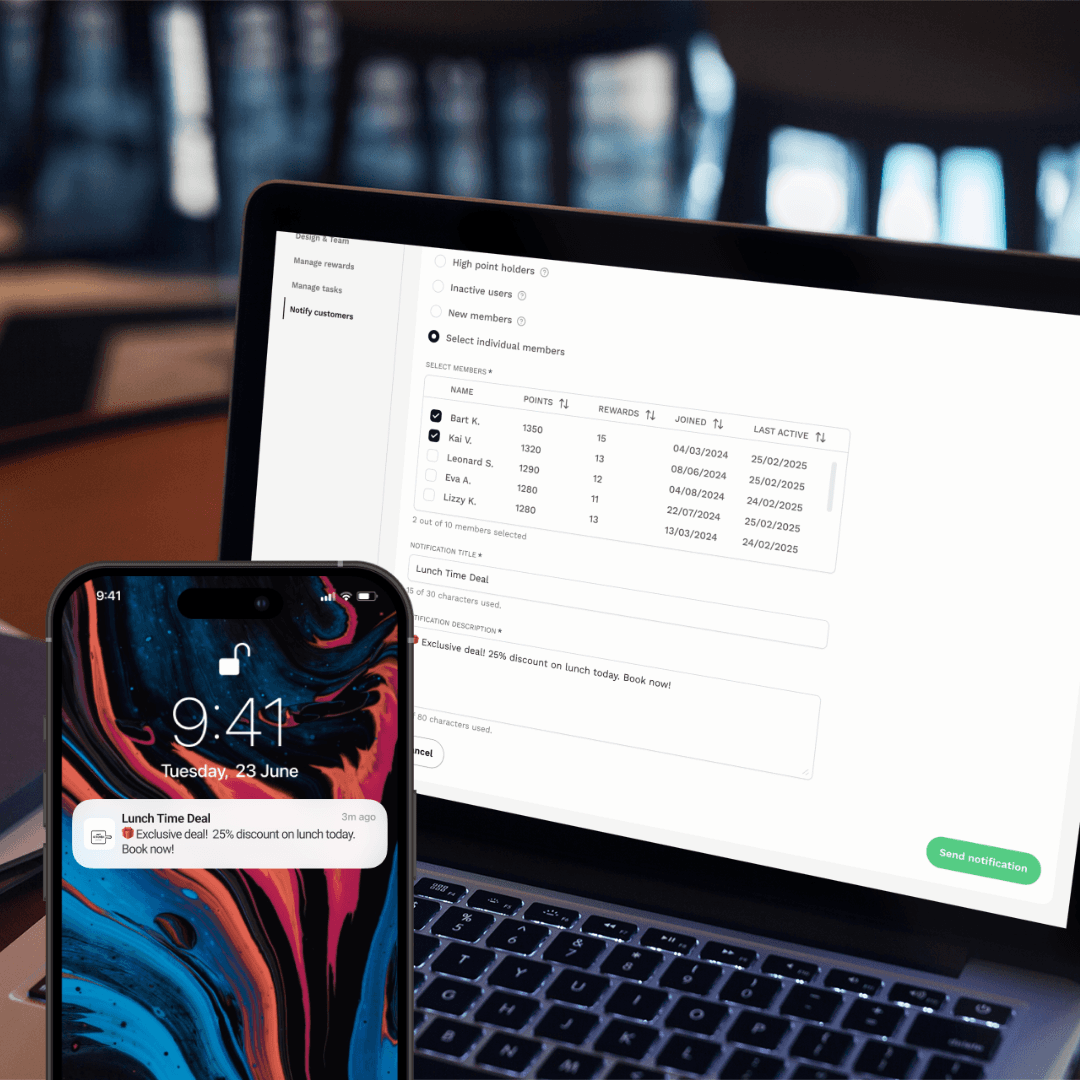
Brands can send manual notifications from the Authic dashboard and also use behavior-triggered notifications to automate engagement. Relevant loyalty use cases include available rewards, new challenges, tier upgrades, possible tier loss, referral success, inactivity reminders, unredeemed rewards, and birthday messages.
Authic also supports a Notification Center, so users can revisit previous messages inside the app. This is especially useful for loyalty content, because members may not act the moment a notification appears but still want to find the offer, reward, or update later. For brands that want to reduce manual work while keeping messaging timely and personal, this creates a more practical retention workflow. Teams looking for more advanced push notification capabilities can explore how notifications fit into the wider platform.
FAQ about mobile push notifications for customer loyalty
How do mobile push notifications increase customer loyalty?
They increase loyalty by supporting repeat engagement at key moments. Examples include reward reminders, tier updates, birthday offers, inactivity win-back messages, and challenge completion prompts. These messages make loyalty benefits more visible and give customers a clear reason to return.
What are the best push notifications for loyalty programs?
The best ones are tied to real customer value. Reward availability, unredeemed reward reminders, tier milestones, challenge updates, referral confirmations, and personalized birthday offers are usually stronger than generic promotional blasts.
How often should you send loyalty push notifications?
There is no universal number. The right frequency depends on how often you can send useful, relevant messages. Behavior-triggered notifications usually perform better than frequent general campaigns because they are tied to actual customer actions.
What is the difference between push notifications and in-app messages for loyalty?
Push notifications bring users back into the app from outside the app. In-app messages appear while the user is already active. Push is better for re-engagement and urgency, while in-app messaging is useful for explaining offers, onboarding, or next steps after the tap.
Can small and mid-sized brands use mobile push notifications effectively?
Yes. You do not need an enterprise-scale strategy to benefit from push messaging. Even a focused setup with key triggers such as reward reminders, birthdays, inactivity prompts, and tier updates can improve engagement and retention.
What should you avoid in loyalty push notifications?
Avoid vague copy, poor timing, over-messaging, and irrelevant offers. If customers do not see clear value in the notification, they are more likely to ignore it or turn notifications off altogether.

Founder & CEO
Founder & CEO of Authic. Wouter helps businesses build lasting customer relationships through branded loyalty apps that drive engagement, repeat visits, and growth.

Continue reading

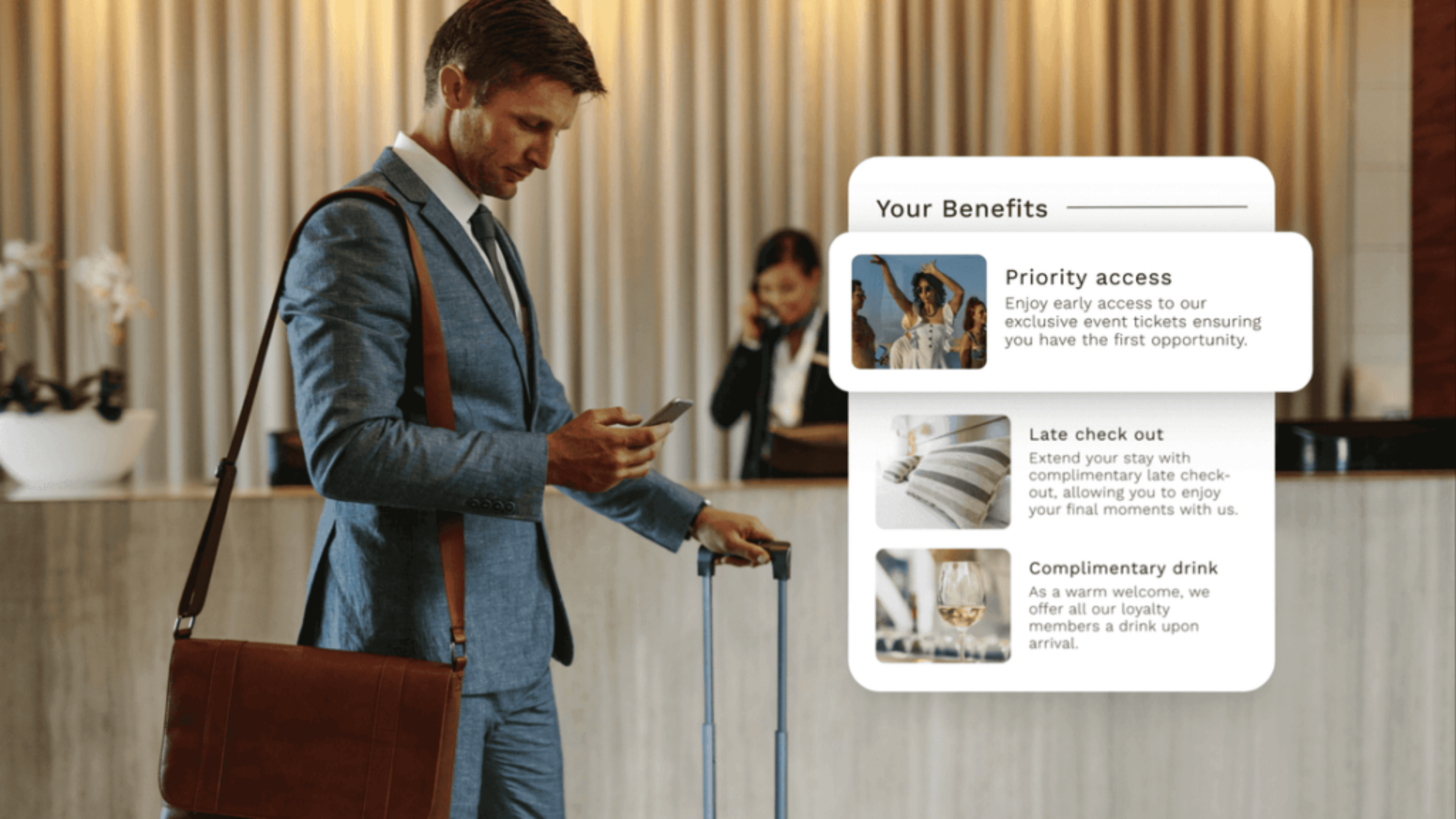

We provide the technology and simplicity to turn customers into loyal fans, without the complexity or cost of building it yourself.