
Fast, no code setup
Increase sales on autopilot

Choosing a white label loyalty provider is a strategic decision that touches your customer experience, data strategy, and roadmap. The right platform should let you launch fast, integrate cleanly with your tech stack, and scale from simple punch-card style rewards to sophisticated, event-based engagement. This guide gives you clear criteria, comparison points, and questions to ask so you can select a provider that fits your goals, budget, and timeline.
Translate your business goals into selection criteria
Start by turning your outcomes into requirements. Clarity here prevents scope creep later and keeps vendor evaluations apples to apples. Use this white‑label loyalty platform features checklist to capture must‑have capabilities and selection criteria.
Program objectives and KPIs
What specific behaviors do you want to reward beyond transactions, such as bookings, visits, referrals, reviews, social engagement, or attendance?
Which metrics matter most: frequency, AOV, retention, LTV, or first-party data capture?
Audience and channels
Where will members engage: mobile app, web, POS, kiosk, booking system, social, email, WhatsApp, SMS?
Do you need multilingual and multi-location support?
Reward design
Do you need points, tiers, perks, subscriptions, challenges, or card-linked rewards?
Will you offer partner or third-party rewards via API marketplaces?
Operations and governance
Who configures campaigns day to day: marketing via no-code, or product via API?
What roles, permissions, and approval workflows do you need?
Data, privacy, and analytics
What first-party data must you collect, and how will you handle consent and data residency?
Which dashboards, cohort analysis, and exports do you need for reporting and activation?
Integrations and IT constraints
Which systems must connect on day one: POS, CRM, CDP, booking, ePOS, payment, ecommerce, apps, kiosk?
Do you need real-time webhooks, SDKs, or batch imports, and how will identity be resolved across touchpoints?
Compliance and security
Which frameworks matter for your industry and region such as GDPR, PCI considerations, SOC 2, ISO 27001?
Do you require SSO, SAML, or specific DPA clauses and audit rights?
Timeline and resources
What is your time-to-market target and who will implement?
What can you launch now and phase later without rework?
Core vs advanced features to compare
A strong white label loyalty platform covers the essentials from day one and offers advanced capabilities as you scale. Use the comparison below to align features to your roadmap.
Area | Core features | Advanced features
|
|---|---|---|
Branding | Custom logo, colors, copy | Theme control, layouts, component-level branding |
Rewards engine | Points, earn and burn, simple tiers | Event-based rules, challenges, referrals, tier benefits, expirations |
Campaigns | No-code campaign setup | Rule chaining, A/B tests, scheduling, geo rules |
Redemption | Coupons, vouchers, POS codes | Real-time redemption, inventory-aware rewards, partner catalogs |
Integrations | POS and ecommerce connectors | API-first architecture, SDKs, webhooks, CDP and CRM sync |
Mobile and UX | Mobile-responsive member portal | Native apps, wallet passes, kiosk flows, offline support |
Data and analytics | Dashboards, exports | Cohorts, funnels, LTV, attribution, predictive insights |
Privacy and security | GDPR-ready, consent storage | Data residency options, SSO, RBAC, encryption controls |
Operations | User roles, basic permissions | Granular RBAC, approvals, audit trails, change logs |
Scalability | Handles core volumes | Multi-brand, multi-country, SLA options, rate limits |
If mobile is central to your member experience, a white‑label loyalty app gives you brand control, native UX, and faster launches without starting from scratch.
Flexibility and integration matter more than features
Features are only as valuable as your ability to tailor and connect them. Look for an API-first platform that lets you trigger rewards on any event across your stack such as purchases, bookings, attendance, content views, referrals, and social actions. Real-time webhooks and SDKs keep experiences in sync across POS, ecommerce, apps, and kiosks, enabling instant recognition and redemption at the point of service.
Integration flexibility reduces time-to-value. Native connectors to POS and booking systems, plus a well-documented REST API, make it easier to ingest transactions, sync member profiles, and push segments to your CRM or CDP. A no-code campaign builder empowers marketing to launch and iterate without tickets, while developers retain control through APIs for custom flows. For channel coverage and scale considerations, see why omnichannel and mobile‑first loyalty strategies win.
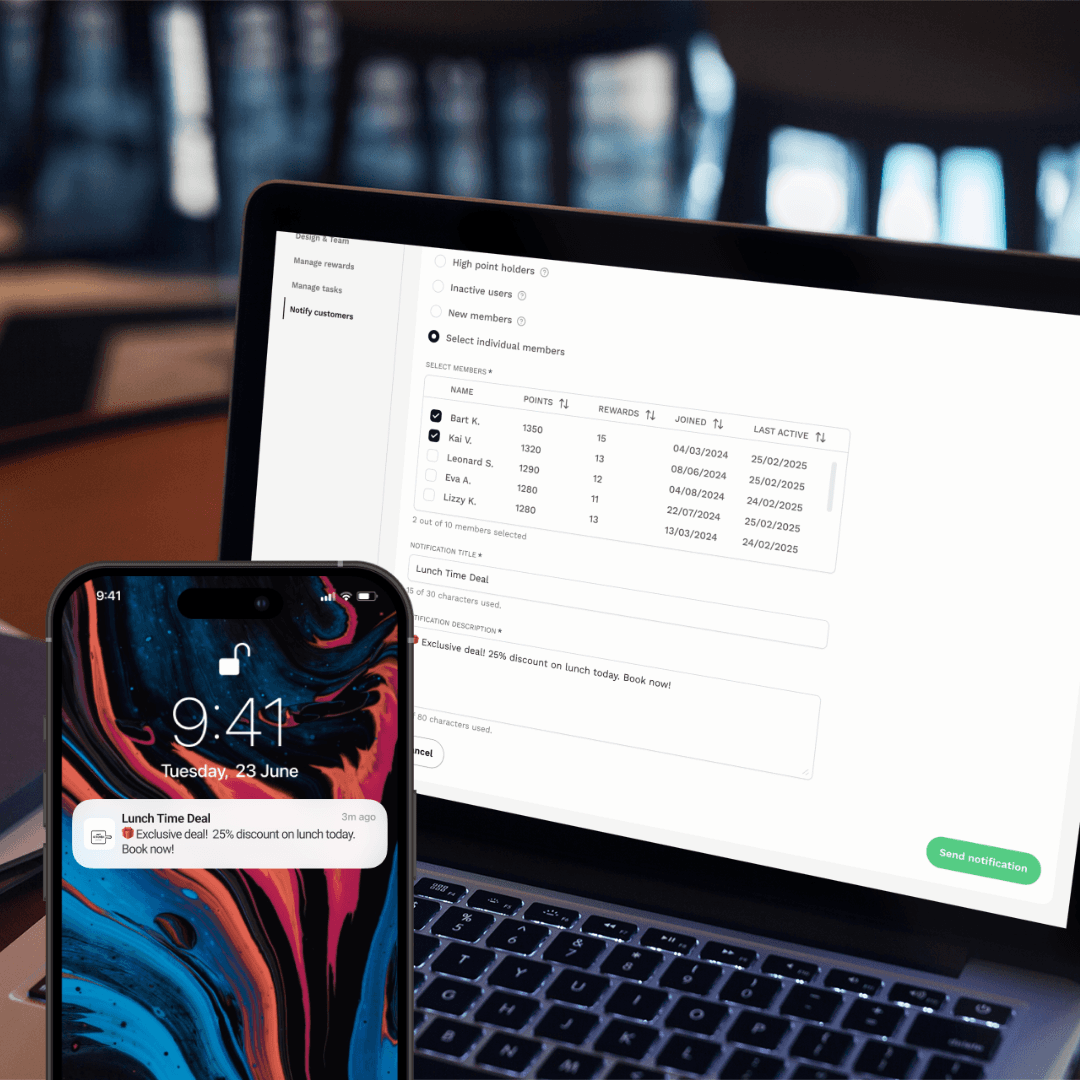
Authic is designed with this balance in mind. You can launch in minutes via a no-code campaign builder and deepen the integration using the loyalty API and analytics when you need advanced orchestration across hospitality, beauty, sports, and healthcare environments.
Data, privacy, and security you can stand behind
Loyalty is a first-party data engine. Your provider should make consent capture, lawful basis management, and data minimization straightforward, and provide clear data maps for audits. Verify how personally identifiable information is stored and encrypted, how deletion and portability requests are handled, and whether you can control data residency for your markets.
Expect role-based access control, SSO options, and audit logs for change tracking. Ask for documentation on GDPR readiness and DPAs, and ensure event payloads can exclude sensitive data by default. This foundation protects customers and makes your marketing more resilient as third-party identifiers continue to fade.
Build vs buy vs white label
Building offers ultimate control but demands significant engineering investment, ongoing maintenance, and security ownership. Time-to-market is long, and feature parity with modern loyalty platforms is a moving target.
Buying off-the-shelf is fast, yet some products lock you into rigid earn-burn mechanics or limited branding, forcing workarounds as your program evolves.
A white label platform strikes a pragmatic balance. You get speed and stability, but with your brand front and center and your rules shaping the experience. Prioritize providers that combine no-code tools for rapid iteration with open APIs for custom flows. This lets you pilot quickly, validate impact, and scale program sophistication without re-platforming.
Pricing, TCO, and scaling plan
Compare total cost of ownership beyond license fees. Consider implementation effort, integration work, support tier, overage charges, and the cost of change requests. Clarify your year one scope and a phased roadmap so you can start small and add complexity after you validate KPIs. For benchmarks and trade-offs that shape TCO, review white‑label loyalty software pricing and cost factors.
What is included in onboarding and what is time-and-materials?
How are MAUs, transactions, or API calls priced as volumes grow?
Can you switch plans or add modules without penalties?
What is the cost to migrate data or exit if needed?
Vendor due diligence and support
Look for a partner, not just software. Assess documentation, SLAs, uptime track record, and incident communication. Confirm that you get responsive support during the initial learning curve and access to product specialists for best practices. Review the roadmap process and how feature requests are handled.
Authic provides a no-code setup, integration support for POS and booking systems, and a dashboard for campaign management and analytics to help your team ship quickly and learn faster.
Red flags to watch out for
Rigid, transaction-only rules with no event-based triggers
Limited or undocumented APIs and no webhooks
Weak consent and data deletion processes
Opaque pricing or punitive overage fees
No roadmap visibility or slow support response times
Industry-specific considerations
Your vertical influences must-have integrations and mechanics. Hospitality often needs POS and booking sync with instant redemption at the venue. Beauty and wellness benefit from appointment systems and tiered perks to drive repeat visits. Sports and fitness thrive on challenges, attendance streaks, and community events. Medical and dental practices need strict data controls, simple perks, and clear consent flows. Choose a provider with proven setups in your environment and the ability to tailor rules to your operational reality.
A quick example of flexibility in action
With Authic, sport venues can reward play frequency, bookings, and social challenges in one program. For example, players earn points for each session, get bonus rewards for streaks, and redeem for merchandise or event tickets. Marketing teams configure this in minutes via the campaign builder, while the API connects bookings and in-venue systems so recognition and redemption happen in real time under your brand.
Checklist: questions to ask a white label loyalty provider
Can marketing launch and iterate campaigns without developer tickets, and can developers extend via API and webhooks when needed?
Which POS, booking, CRM, CDP, and ecommerce systems do you integrate with today, and how do you handle identity resolution across channels?
How do you model event-based rules beyond purchases such as referrals, attendance, and social engagement?
What redemption options exist at POS and online, and how do you prevent fraud or double redemption?
How is first-party data collected, consented, stored, and deleted, and can we choose data residency?
What analytics are included for cohorts, LTV, and campaign lift, and can we export data to our warehouse?
What is the implementation timeline for our scope, who does what, and what is covered in onboarding?
How are usage and overages priced, and what does year two TCO look like as volumes scale?
If we need custom components, how are they delivered and maintained over time?
FAQ
What is a white label loyalty platform?
It is a ready-made loyalty system you can brand as your own. It provides the rewards engine, member experiences, analytics, and integrations out of the box so you can launch faster while presenting a fully branded experience to customers.
How is a white label provider different from custom development?
Custom development gives full control but requires heavy engineering, longer timelines, and ongoing maintenance. A white label provider accelerates time-to-market and reduces risk while still allowing deep branding, flexible rules, and API-based customization when needed.
How long does implementation take?
Simple programs with no-code setup can go live in days or weeks. Timelines extend with custom flows, complex integrations, data migrations, or multi-country rollouts. Align scope with your first milestone and phase the rest.
Which integrations are essential?
At minimum, connect POS or ecommerce for transactions and your CRM or CDP for activation. Many teams also sync booking systems, payment providers, and mobile apps. APIs, SDKs, and webhooks are key for reliable, real-time experiences.
How do you measure ROI of a loyalty program?
Track incremental frequency, AOV, retention, and LTV alongside engagement metrics like enrollments, active rate, and reward redemption. Use cohorts and control groups to isolate lift and refine rules based on performance.
Is a no-code builder enough for complex needs?
No-code accelerates iteration for marketers. For more complex logic or unique touchpoints, ensure the platform also offers robust APIs and webhooks so your developers can extend capabilities without hacking around the core.
If you want to move fast with a branded experience and keep full control of your data, a white label solution like Authic lets you start small, prove value, and scale program sophistication on your terms.

Founder & CEO
Founder & CEO of Authic. Wouter helps businesses build lasting customer relationships through branded loyalty apps that drive engagement, repeat visits, and growth.

Continue reading



We provide the technology and simplicity to turn customers into loyal fans, without the complexity or cost of building it yourself.