Fast, no code setup
Increase sales on autopilot

Gamification features in white label loyalty platforms turn a standard points program into a branded experience that keeps customers coming back. Instead of rewarding transactions alone, you can motivate repeat visits, referrals, check-ins, reviews, social actions, and higher spend through mechanics that feel interactive and measurable. For brands that want control over design, data, and customer journey, the value of white label loyalty is not just customization - it is the ability to launch gamified loyalty features that fit your business model instead of forcing your brand into a generic template.
If you are comparing platforms, the most important question is not whether a vendor offers gamification at all. It is which features are actually useful, how flexible they are, and whether they can be managed without slowing down your team. Below, you will find the gamification mechanics that matter most, how they support customer engagement and retention, and what to look for in a white label loyalty platform if you want results instead of feature bloat.
What gamification means in a white label loyalty platform
In a loyalty context, gamification means applying proven game mechanics to customer actions so people feel progress, achievement, competition, and reward while interacting with your brand. In a white label loyalty platform, these mechanics live inside your own branded app or loyalty environment, not a third-party experience that looks and feels disconnected.
This matters because gamification only works well when it feels native to your customer journey. A coffee bar may want stamp cards and visit streaks. A salon may want tier progression and review challenges. A sports club may want leaderboards, check-in rewards, and referral missions. A strong white label setup lets you adapt these mechanics to your audience, visual identity, and business logic.
The best platforms make this possible through a mix of no-code campaign management, configurable earning rules, and loyalty API connections to your existing systems. That is what allows gamification features to become operational instead of staying as nice ideas in a product demo.
Core gamification features to look for
Points and point collection
Points are still the foundation of many gamified loyalty programs because they create visible progress. On their own, points are simple. The real value comes from how flexibly they can be earned, tracked, and redeemed.
In a white label loyalty platform, points should support more than purchases. You should be able to award points for bookings, check-ins, referrals, reviews, survey completions, social actions, or campaign-specific goals. This turns your loyalty program into a behavior engine rather than a discount engine.
Look for platforms that allow you to define earning rules clearly, automate point tracking, and connect points to rewards without manual work. If customers can see their balance update in real time, the feedback loop becomes much stronger and customer engagement improves.
Challenges
Challenges are one of the most effective gamification features because they guide customers toward specific actions. Instead of waiting for people to participate, you give them a clear objective and a reason to complete it.
Examples include completing three visits in a month, leaving a review after an appointment, referring a friend, following your brand on social media, or booking during a low-demand period. This kind of structure works especially well for brands that want to increase activity beyond one-time purchases.
A good white label loyalty platform should let you set challenge frequency, start and end dates, participation limits, rewards, and completion tracking. It should also show which interactive challenges drive revenue, repeat visits, and redemptions, so you can improve your campaigns over time.
Tiers and VIP levels
Tiers add status to loyalty. Instead of giving every customer the same experience, you reward progress with access, recognition, and better benefits. This is important because not every customer is motivated by the same thing. Some want discounts, but others respond more strongly to exclusivity and achievement.
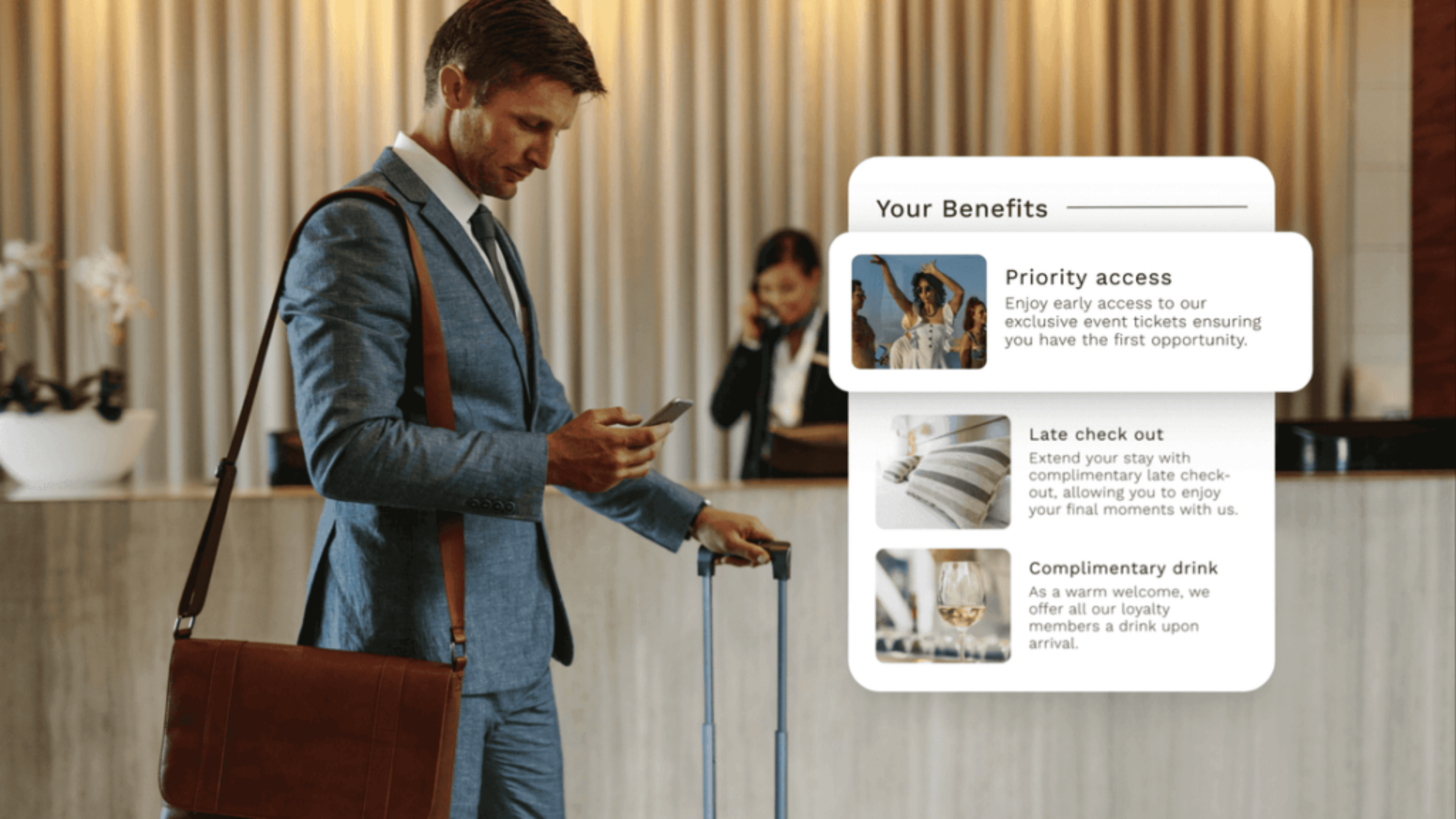
Tier-based loyalty works well in white label environments because the naming, visuals, and perks can match your brand. A hospitality brand may use Gold and Platinum tiers. A sports brand may use performance-based levels. A beauty business may position tiers around VIP treatment and early access.
Look for flexible tier logic based on spend, visits, check-ins, bookings, or a mix of behaviors. The platform should also make loyalty tiers progress visible so customers know what they are working toward.
Leaderboards
Leaderboards introduce friendly competition. They are especially effective when your audience is naturally motivated by achievement, visibility, or community status. In the right setting, they can increase engagement frequency and make loyalty feel dynamic instead of passive.
Leaderboards can rank customers by points earned, completed challenges, referrals, visits, or campaign performance. For example, a sports club could highlight top performers for check-ins or completed classes, while a hospitality concept could run a limited-time leaderboard around visits or social participation.
This feature only works when it is configurable. You may want a leaderboard by location, time period, customer segment, or campaign type. The best platforms also allow you to reward top performers automatically, which keeps the mechanic manageable for your team.
Rewards and unlockable benefits
Rewards are what make the game loop meaningful. Without a clear payoff, progress loses its impact. In strong white label loyalty platforms, rewards are not limited to fixed vouchers. They can include discounts, free products, exclusive access, early booking options, VIP cards, or partner offers.
Unlockable rewards work especially well with gamification because they give customers something to strive toward. Instead of simply collecting points in the background, users can see that a new benefit becomes available after a challenge, a streak, or a tier upgrade.
Look for reward settings that connect directly to your webshop, booking flow, or in-store redemption process. If redemption is hard to use, even the best gamification mechanics will underperform.
Stamp cards and visit-based mechanics
Stamp cards remain highly effective for businesses with recurring visits. They are simple to understand, easy to communicate, and naturally tied to repeat behavior. In a modern white label loyalty app, digital stamp cards can go far beyond the old paper version.
You can trigger stamps after bookings, purchases, or check-ins, combine them with milestones, and connect them to bonus rewards. This makes them useful for restaurants, salons, clinics, and sports venues where visit frequency directly impacts retention.
The key is automation. A platform should support digital tracking through connected systems so your team does not have to validate every stamp manually.
Referrals as a gamified mechanic
Referrals are often treated as a separate growth channel, but they also fit naturally into gamified loyalty. They give customers a mission, a measurable result, and a reward tied to advocacy.
In a white label loyalty platform, referral features should let you reward both the inviter and the new member, track conversion, and connect referral performance to broader campaign reporting. This allows referrals to become part of a larger engagement strategy rather than a disconnected promotion.
For many brands, referrals work best when combined with points, challenges, or leaderboard visibility. That combination makes advocacy feel active and rewarding instead of occasional.
Notifications and progress prompts
Gamification is not only about mechanics. It is also about timing and feedback. Notifications are what bring customers back into the experience when they are close to a reward, have dropped out of a challenge, or have unlocked something new.
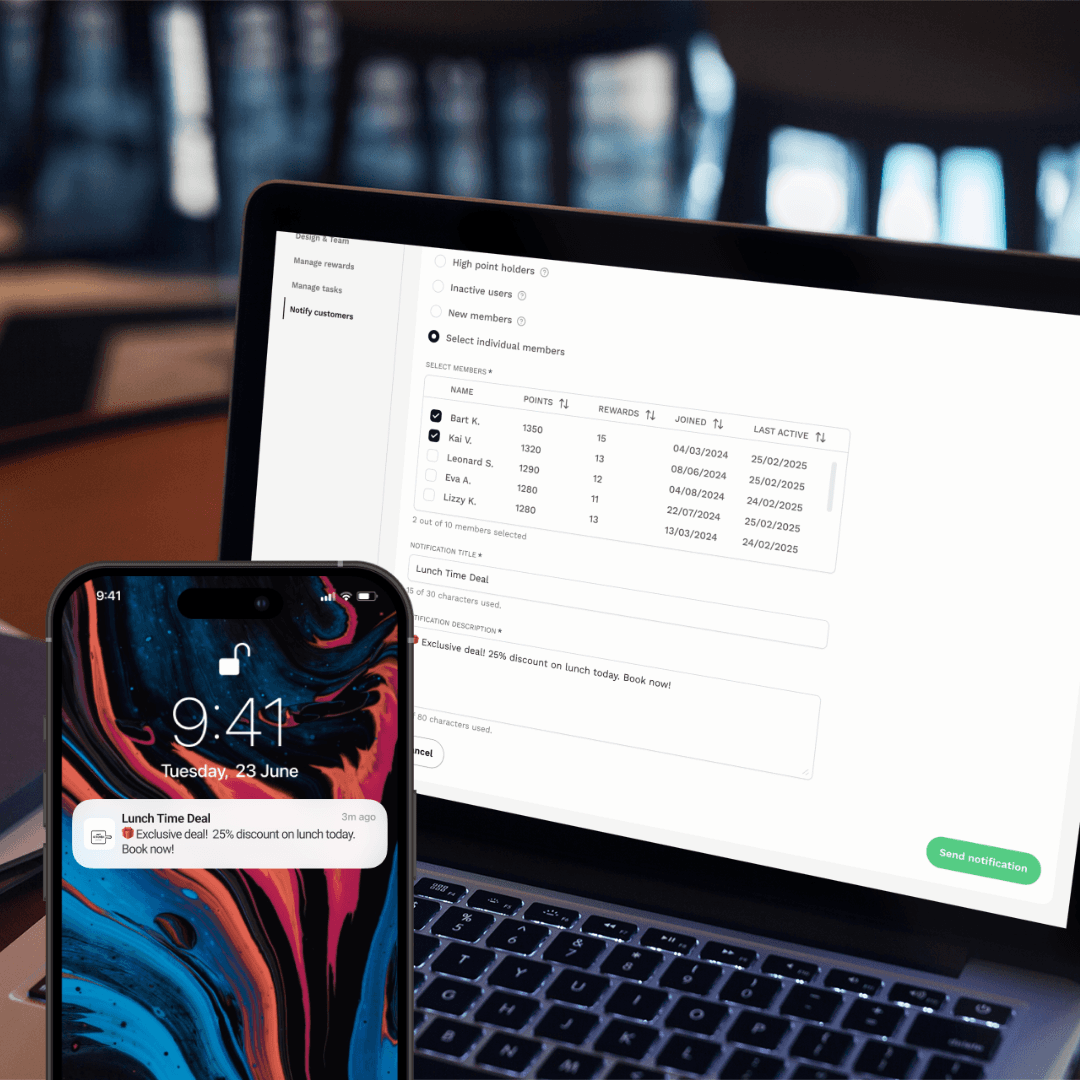
A strong white label loyalty platform should support personalized notifications tied to behavior and campaign milestones. Examples include a reminder that one visit remains before a reward, a message that a challenge is about to expire, or a prompt that a customer has entered a new tier.
These moments matter because they turn passive membership into active participation. Without visible prompts, many users will never notice the progress they have already made.
What separates useful gamification features from gimmicks
Not every game mechanic adds business value. Some features look impressive in a feature list but create little impact in practice. The best gamification features are the ones that connect clearly to customer behavior and can be configured around real goals.
Useful features usually have three qualities:
They drive a measurable action, such as repeat visits, bookings, referrals, higher spend, or review collection.
They are easy for customers to understand without explanation overload.
They are manageable for your team through no-code settings, automation, or reliable integrations.
If a platform offers badges, streaks, mini-games, and competitions but you cannot connect them to your actual customer journey, the result is complexity without return. When evaluating white label loyalty platforms, always ask how each gamification feature supports engagement, retention, and conversion in your environment.
Why white label matters for gamified loyalty
Gamification works best when it feels like part of your brand, not a bolt-on module. That is why white label loyalty platforms are attractive for businesses that want more than a basic rewards system. You control the branding, customer experience, and communication layer while keeping the loyalty mechanics tailored to your goals.
This is particularly important for sectors where repeat behavior is tied to identity and experience. A sports club, beauty brand, clinic, restaurant, or hospitality concept often has a very different relationship with its customers than a generic e-commerce store. Your app design, rewards, tone of voice, and challenge logic should reflect that.
White label also helps with data ownership and long-term flexibility. Instead of pushing customers into a shared third-party environment, you build engagement inside your own branded loyalty app. That makes it easier to personalize campaigns, test new mechanics, and adapt the program as your business grows.
Operational features that make gamification scalable
No-code campaign management
Gamification loses value if every update requires development time. That is why no-code campaign management is a major advantage in a white label loyalty platform. Your team should be able to launch, edit, pause, or replace challenges and rewards without relying on technical resources for every small change.
This is especially important if you run seasonal campaigns, location-specific promotions, or time-sensitive retention tactics. Fast iteration is often what separates a static loyalty app from a program that actually improves business performance.
API and system integrations
Gamified loyalty works best when it connects to the systems where customer actions already happen. That may include POS software, booking systems, CRM tools, e-commerce platforms, or custom apps. A strong loyalty API makes it possible to trigger points, rewards, check-ins, and campaign logic from real customer behavior.
For example, if your booking system sends completed appointments into the loyalty platform, you can award points automatically. If your webshop connects reward redemption directly, customers get a smoother experience. If your CRM receives challenge and referral data, your marketing becomes more targeted.
Analytics and performance tracking
You should be able to measure more than total members and points issued. The platform should show which challenges were completed, which rewards were redeemed, how referral revenue performs, and which mechanics lead to higher repeat behavior.
Without reporting, gamification becomes guesswork. With reporting, it becomes an optimization channel. This is where practical dashboards matter most, because they help you understand which mechanics deserve more investment and which ones should be adjusted or retired.
How gamification features support different business goals
One of the biggest mistakes brands make is choosing mechanics based on popularity instead of purpose. The better approach is to map each feature to the outcome you want.
Business goal | Gamification features that fit | Typical customer actions
|
|---|---|---|
Increase repeat visits | Stamp cards, points, streaks, visit challenges | Check-ins, bookings, repeat purchases |
Grow customer engagement | Challenges, leaderboards, notifications, badges | App opens, participation, campaign completion |
Boost referrals | Referral rewards, referral challenges, leaderboard ranking | Invites sent, new member signups, referred revenue |
Increase average spend | Tiers, spend-based rewards, milestone unlocks | Higher basket value, repeat transactions |
Collect first-party data | Surveys, review challenges, feedback rewards | Profile completion, reviews, responses |
Strengthen brand loyalty | VIP cards, exclusive perks, branded rewards, tier status | Long-term participation, premium behavior |
What this can look like in practice
A white label loyalty platform becomes much more powerful when these features work together instead of in isolation. A customer might earn points after a booking, complete a challenge for leaving feedback, unlock a reward after several visits, and move into a higher tier that brings exclusive perks. Another customer might join through a referral campaign, appear on a leaderboard, and receive notifications when they are close to a milestone.
That layered approach is what makes gamified loyalty effective. It combines progress, recognition, reward, and repetition inside one branded system. For brands that want to move beyond one-dimensional discounts, this creates a more durable relationship with customers.
Authic approaches this through a white label loyalty platform with a branded app, no-code campaign management, and a Loyalty API. Features such as points-based rewards, rewards, challenges, tiers, leaderboards, VIP cards, notifications, and stamp cards can be configured around actions like bookings, purchases, check-ins, reviews, surveys, social activity, and referrals. That gives businesses a practical way to build gamification into the customer journey without needing a custom development project from scratch.
How to evaluate a platform before you choose one
If you are comparing vendors, do not only ask for a list of mechanics. Ask how flexible each feature is in real use. A serious evaluation should cover:
Which customer actions can trigger points, challenges, and rewards
Whether your team can manage campaigns without developers
How the platform integrates with POS, booking, CRM, or e-commerce systems
How visible progress is for customers inside the branded app
Which metrics are available for challenge completion, referral revenue, and repeat behavior
Whether the experience is fully branded and white label across iOS and Android
The right platform should help you launch fast, iterate quickly, and keep control over your loyalty logic. If it cannot do that, the presence of gamification features alone will not be enough. For a broader comparison of must-have capabilities, use this white-label loyalty platform features checklist.
Frequently asked questions about gamification features in white label loyalty platforms
What are the most important gamification features in a white label loyalty platform?
The most valuable features usually include points, challenges, tiers, rewards, leaderboards, referrals, notifications, and stamp cards. These mechanics support different goals, from repeat visits and higher spend to customer engagement and advocacy.
Why is white label important for loyalty gamification?
White label gives you control over branding, customer experience, and data. That means the gamified loyalty program feels like part of your business instead of a generic third-party tool, which improves consistency and customer trust.
Can gamification features work without a custom-built app?
Yes, if the platform offers a white label loyalty app and no-code management tools. This gives you a branded experience without building everything from scratch, while still allowing flexibility through configuration and API integrations.
Which businesses benefit most from gamified loyalty features?
Businesses with repeat customer interaction tend to benefit most, including restaurants, coffee bars, salons, clinics, sports clubs, and hospitality brands. These models have clear opportunities for visits, bookings, referrals, and milestone-based rewards.
How do leaderboards help in loyalty programs?
Leaderboards create friendly competition and make progress visible. They can increase participation, repeat engagement, and campaign excitement, especially in communities where status and achievement matter.
Are points still relevant, or are they too basic?
Points are still highly relevant when they are tied to more than purchases. When customers can earn points through check-ins, reviews, referrals, surveys, or bookings, points become a flexible engagement tool rather than a simple discount mechanism.
What should I measure in a gamified loyalty program?
Track metrics such as repeat visits, bookings, challenge completion rates, reward redemptions, referral conversions, referred revenue, average spend, and retention over time. These indicators show whether gamification is driving real business outcomes.
Can gamification features be managed without developers?
They can if the platform includes no-code campaign tools. This allows your team to create and edit challenges, rewards, and loyalty mechanics quickly, which is essential for testing and optimization.

Founder & CEO
Founder & CEO of Authic. Wouter helps businesses build lasting customer relationships through branded loyalty apps that drive engagement, repeat visits, and growth.

Continue reading


We provide the technology and simplicity to turn customers into loyal fans, without the complexity or cost of building it yourself.