Fast, no code setup
Increase sales on autopilot

For many padel clubs, revenue growth does not come from attracting more one-time players alone. It comes from turning casual bookings into repeat visits, increasing off-peak court usage, lifting secondary spend, and giving players a reason to stay loyal even when competing clubs are only a few taps away. A well-designed loyalty program helps you do exactly that. Instead of relying on discounts that erode margin, you reward the behaviors that grow club revenue: more court bookings, more lessons, more referrals, more in-club spend, and stronger long-term retention.
In padel, loyalty matters even more because player behavior is social. People often book as a group, join leagues, try multiple venues, and compare availability across booking apps. That means your club needs more than a generic points system. It needs a loyalty strategy built around repeat play, community habits, and revenue mechanics that fit the way padel clubs actually operate.
Why loyalty matters so much for padel clubs
Padel clubs face a specific retention challenge. Many players discover the sport quickly, play a few sessions, and then spread their bookings across different venues based on location, time slots, price, or where their group wants to play. If your club does not build an early habit, you risk becoming interchangeable.
A loyalty program changes that dynamic by creating a reason to return beyond the next available court. It gives players visible progress, unlockable rewards, and a stronger connection to your brand. For the club, that translates into more predictable revenue and better customer lifetime value.
The biggest commercial upside usually comes from five areas:
Higher visit frequency from existing players
Better retention after the first few sessions
More off-peak bookings without cutting prices
Higher spend on lessons, food, drinks, retail, and events
More new players acquired through referrals
That is why the best padel club loyalty program is not just a nice extra. It is a revenue system.
How loyalty programs drive revenue for padel clubs
Loyalty programs increase revenue when they reward profitable player behavior and make repeat engagement easy. In practice, that means linking rewards to activities that directly affect your top line and retention.
More repeat court bookings
The most direct revenue lever is repeat play. If a player knows that every booking brings them closer to a free court credit, priority access perk, VIP status, or exclusive challenge reward, they have a reason to choose your club again next week. This is especially effective during the first 6 to 10 visits, when habits are still forming.
Higher player retention
Retention is where loyalty compounds. Winning a player once is expensive. Keeping that player active over months is where profitability improves. A loyalty program makes the relationship stickier by giving players progress they do not want to lose, personalized incentives, and a sense that playing at your club unlocks more value over time.
Increased off-peak utilization
Empty courts during low-demand hours are lost revenue. Loyalty lets you shift demand without defaulting to blanket discounts. You can offer double points, bonus stamps, or limited-time rewards for weekday daytime sessions and other lower-occupancy moments. That fills inventory that would otherwise go unused while protecting your peak-hour pricing.
More secondary spend
Revenue at a padel club does not stop at court bookings. Players also spend on coaching, clinics, tournaments, drinks, snacks, merchandise, and memberships. A points-based loyalty program can reward these actions too, which increases average spend per player and encourages cross-category behavior.
Referral-driven growth
Padel is naturally social, which makes referral rewards especially powerful. If a player brings in a new friend or fills a four-person booking more often because your program rewards referrals, you gain customer acquisition without depending only on paid marketing. The value is even higher when the referred player also enters your loyalty ecosystem from day one.
The revenue mechanics behind a successful padel loyalty program
Not every reward model works equally well. The strongest loyalty programs for padel clubs are simple enough for players to understand immediately, but flexible enough to support different revenue goals.
Points programs
Points are useful when you want flexibility. Players can earn points for court bookings, lessons, tournament participation, bar spend, pro shop purchases, referrals, and even off-peak play. This model works well if your club wants one loyalty layer across multiple revenue streams.
Example actions you can reward:
Points per euro spent
Points per minute played
Bonus points for first referral
Double points during quiet hours
Extra points for completing a challenge or league season
Stamp card mechanics
Stamp-based loyalty is often the easiest way to launch. The logic is instantly clear: play a set number of sessions, earn a reward. For clubs that want a low-friction program focused on repeat bookings, this remains one of the most effective options.
A common structure is straightforward: one stamp per court session, reward after a fixed number of visits. This simplicity matters because players engage more when they can see progress at a glance.
Tiered or VIP loyalty
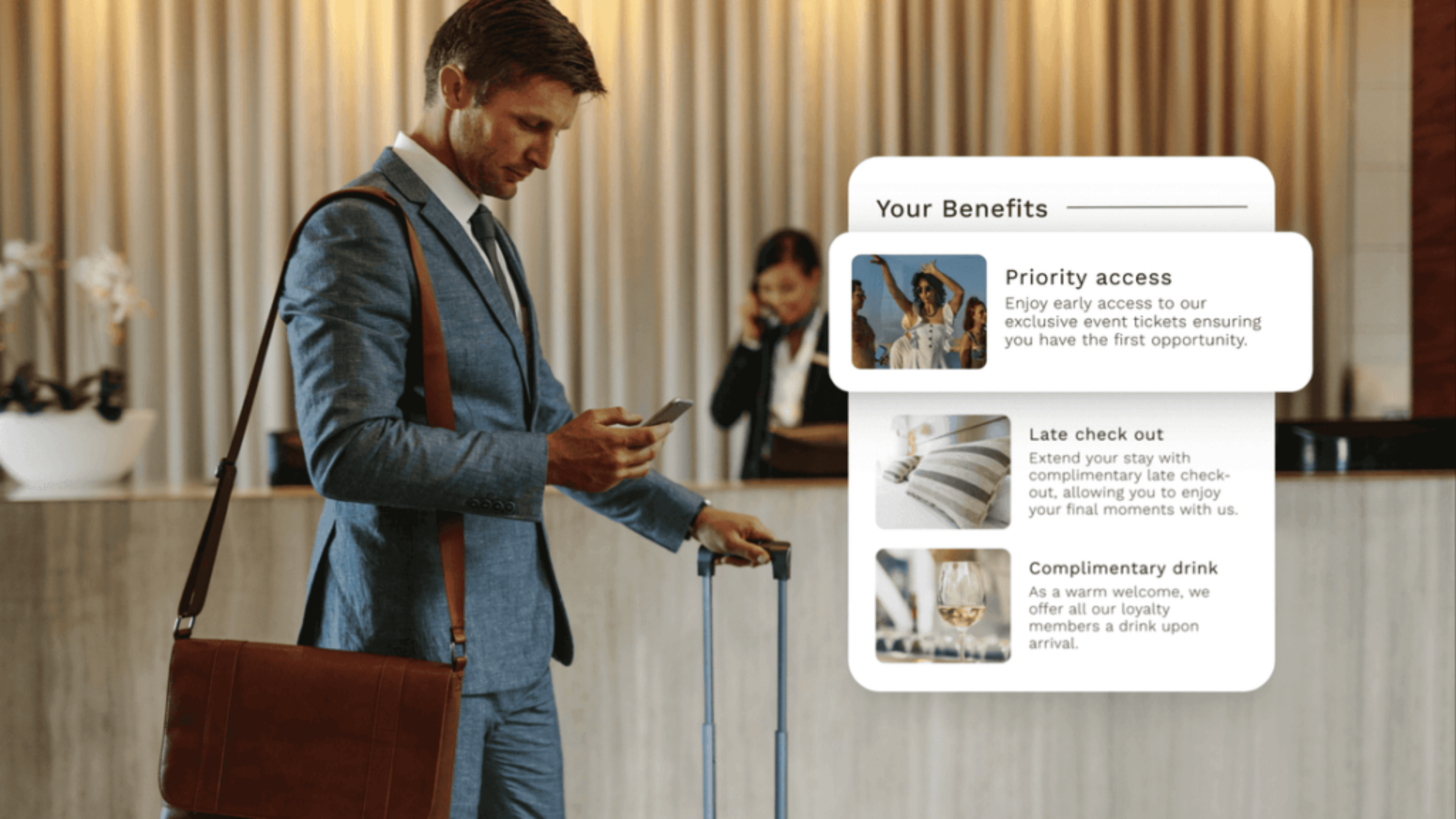
Tiers help increase revenue from your most valuable players. Instead of rewarding only frequency, you create status levels tied to activity or spend. Those levels can unlock benefits such as early booking windows, exclusive events, premium challenges, or higher earn rates.
This model is especially relevant for clubs with strong communities, recurring groups, league players, or members who already engage in multiple ways.
Membership-linked rewards
If your club already offers memberships or subscriptions, loyalty can make them more attractive. Rather than only giving a discount, you bundle in earning mechanics, priority perks, and members-only rewards. That increases perceived value and supports recurring revenue.
Start with the revenue goal, not the reward
One of the biggest mistakes clubs make is launching a loyalty program before deciding what behavior they want to change. The reward structure should always follow the business objective.
Revenue goal | Best loyalty mechanic | Why it works
|
|---|---|---|
Increase repeat bookings | Stamp card or points per court booking | Builds a return habit and gives players visible progress |
Fill off-peak courts | Double points or bonus rewards in quiet hours | Shifts demand without broad discounting |
Boost coaching and clinics | Separate rewards for lesson attendance | Encourages high-margin repeat participation |
Grow referrals | Reward both the referrer and the new player | Supports acquisition through social behavior |
Lift in-club spend | Points on bar, shop, and add-on purchases | Increases average revenue per active player |
Retain best customers | VIP tiers and status-based perks | Protects high-value relationships and increases loyalty depth |
What rewards actually work for padel players
The best rewards are relevant, reachable, and financially sensible. If a reward feels too far away, players disengage. If it is too generous, the program can hurt margin. The sweet spot is a reward structure that feels worth pursuing while still supporting profitable behavior.
Effective reward examples for padel clubs
Free or discounted court credit after a set number of bookings
Bonus points for off-peak sessions
Free clinic after a series of coaching sessions
Priority booking access for active players or VIP tiers
Referral rewards for bringing a first-time player
Rewards redeemable on drinks, gear, lessons, or events
Seasonal challenges that unlock limited perks
How to set reward value
A practical rule is to keep reward cost proportionate to the extra revenue the behavior generates. Many clubs work within a reward cost range of around 5 to 10 percent of incremental revenue, depending on margin and capacity. The exact number depends on your court economics, coaching margins, and whether the reward helps monetize otherwise empty time slots.
You should also consider speed to reward. If your average player can realistically unlock something within 1 to 2 months of normal activity, engagement tends to stay much higher than in programs with long earning windows.
Off-peak incentives are one of the fastest revenue wins
For many clubs, off-peak utilization is where loyalty programs create the clearest short-term revenue lift. Courts that sit empty on weekday mornings, early afternoons, or other low-demand periods can be activated with targeted incentives rather than permanent price reductions.
This matters because discounting changes what players expect to pay. Loyalty-based incentives change when they choose to play.
Examples of off-peak loyalty incentives
Double points before 17:00 on weekdays
Bonus stamp days for low-occupancy slots
Extra rewards for completing a set number of off-peak bookings
Limited-time push campaigns for last-minute availability
These mechanics help you protect rate integrity while still creating urgency. They also let you test different incentives by time window, player segment, or season.
Referrals turn community behavior into measurable revenue
Padel is usually played with friends, colleagues, partners, and league teammates. That makes referrals more natural than in many other sports categories. A strong referral mechanic gives players a clear reason to introduce new people to your club and helps you track which existing members actually drive growth.
The most effective setup usually rewards both sides:
The current player gets points, stamps, credit, or a perk
The new player gets a beginner reward, first-visit incentive, or welcome offer
This creates a better first experience for the new player and gives you a stronger chance of turning them into a repeat visitor. Over time, referral revenue can become one of the most efficient acquisition channels inside your loyalty strategy. One club earned more than €21,000 from referrals in 6 months, showing how community-driven acquisition can translate into measurable commercial results.
Push notifications and wallet passes help convert intent into bookings
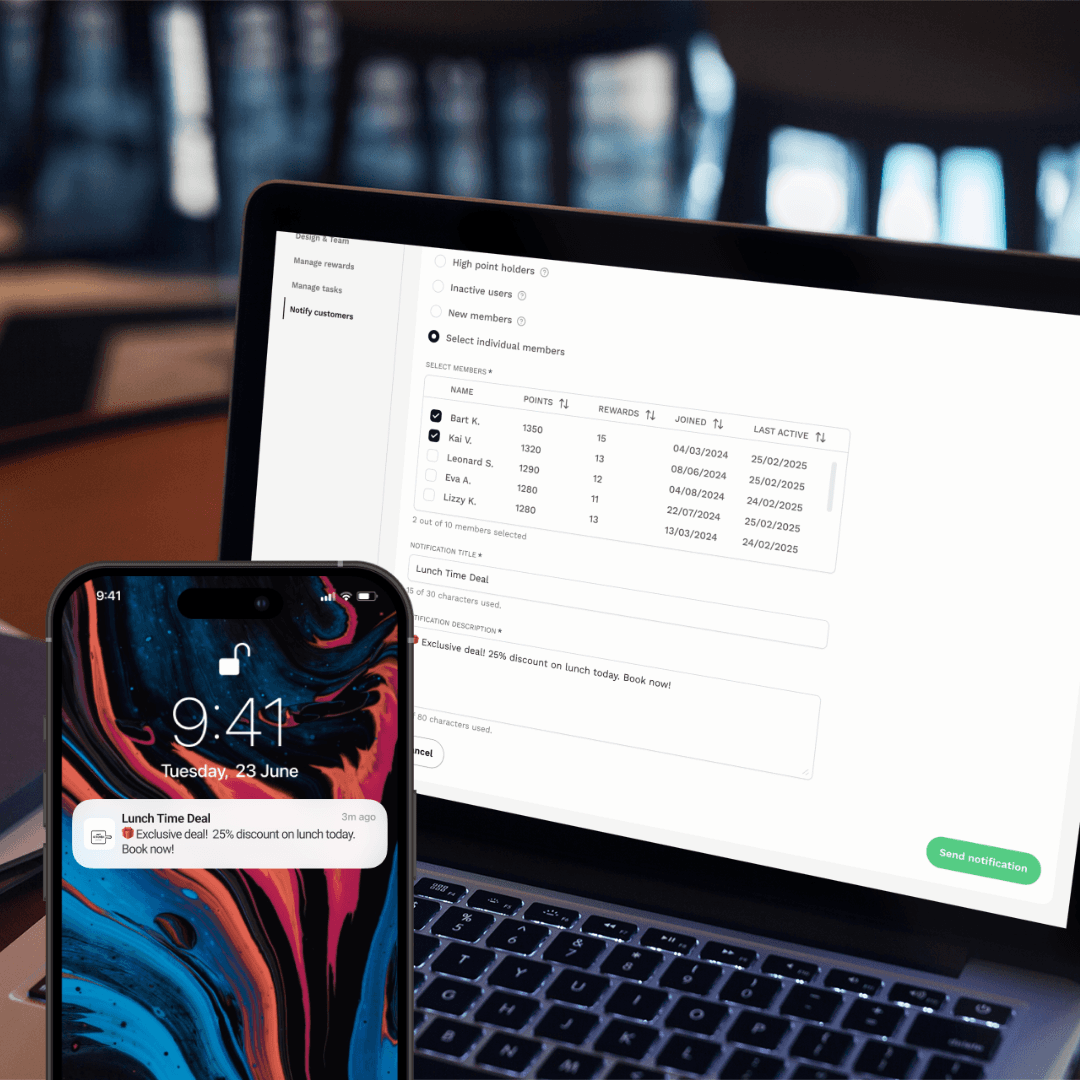
Rewards alone do not drive revenue if players forget the program exists. Communication is what keeps loyalty active. That is why digital loyalty programs for padel clubs often perform best when paired with wallet cards, app-based journeys, or push notifications that make progress and offers visible at the right moment.
Useful loyalty-triggered messages include:
Reminder that a player is one booking away from a reward
Notification about double points in off-peak hours
Alert for last-minute court availability
Message tied to a referral or challenge milestone
League or event reminder connected to a reward opportunity
The key is relevance. Messages should help players act, not feel like generic advertising. Done well, this communication layer increases redemption, repeat bookings, and overall engagement.
A practical example of revenue-driven loyalty for padel clubs
A revenue-focused loyalty setup for a padel club might combine several mechanics instead of relying on one generic reward. For example, the club could award points for court bookings, lessons, purchases, and referrals, while adding bonus multipliers for off-peak play. More engaged players could unlock VIP benefits such as priority access or exclusive perks, while wallet cards and notifications keep the program visible.
This kind of approach works because it connects loyalty to multiple revenue levers at once:
Repeat bookings increase through clear progress
Off-peak demand improves through multipliers
Secondary spend rises through broader earning options
Referrals add new customer acquisition
VIP mechanics deepen retention among valuable players
Authic supports this type of setup with a white-label loyalty platform for padel clubs, including branded loyalty experiences, rewards, tiers, referrals, wallet cards, notifications, analytics, and integrations through its Loyalty API. That gives clubs a way to launch under their own brand while keeping focus on measurable business outcomes such as member growth, visit frequency, retention, spend, redemptions, and revenue impact.
How to measure whether your loyalty program is driving revenue
You cannot judge a padel club loyalty program by sign-ups alone. The real question is whether it changes behavior in a profitable way. Track metrics that connect directly to commercial performance.
Core KPIs to monitor
Repeat booking rate
Visit frequency per active player
Retention after first visit or first month
Off-peak court utilization
Average spend per player
Referral conversions
Reward redemption rate
Revenue per loyalty member versus non-member
What good data helps you do
When your loyalty setup includes loyalty analytics for padel clubs, you can see which incentives are actually working. That lets you adjust reward thresholds, test off-peak multipliers, compare referral campaigns, and identify which player segments respond best. In other words, loyalty becomes an optimization tool, not just a marketing extra.
Common mistakes that limit revenue impact
Even clubs with strong player demand can leave money on the table if the loyalty program is poorly designed. These are the most common issues:
Making rewards too complicated to understand
Offering rewards that are too weak to motivate behavior
Giving away too much margin on already busy peak-hour sessions
Ignoring off-peak capacity as a loyalty opportunity
Focusing on sign-ups instead of active usage
Not promoting the program at booking, check-in, and post-visit moments
Failing to connect loyalty to referrals, coaching, or add-on spend
The best programs stay simple on the player side and strategic on the business side.
How to launch a padel club loyalty program without overcomplicating it
If you are starting from scratch, begin with one clear revenue objective and one primary mechanic. For many clubs, that is repeat bookings or off-peak utilization. Once the program is active and players understand it, you can layer in referrals, VIP benefits, challenges, or category-specific rewards.
A simple rollout path
Choose your main business goal
Select one easy-to-understand loyalty mechanic
Set reward thresholds based on margin and player behavior
Promote the program at every player touchpoint
Use data to improve earn rates, timing, and offers
Add advanced mechanics after adoption is proven
Clubs that launch quickly and iterate usually outperform clubs that wait for a perfect setup. The goal is not to build the most complex loyalty program. It is to create a program that reliably drives bookings, retention, and revenue. If you are planning implementation, this guide on how to build a successful loyalty program is a useful next step.
FAQ about loyalty programs for padel clubs
How do loyalty programs increase revenue for padel clubs?
They increase revenue by improving repeat bookings, retention, referrals, off-peak occupancy, and secondary spend. Instead of rewarding every transaction equally, the strongest programs reward the behaviors that create more lifetime value.
What is the best loyalty program model for a padel club?
That depends on your goal. A stamp card is strong for repeat bookings, a points program is better for flexibility across multiple revenue streams, and VIP tiers work well for retaining your most valuable players. Many clubs benefit from combining these mechanics, and different loyalty program types for padel clubs suit different revenue goals.
Can a padel loyalty program work without discounting?
Yes. In many cases, that is preferable. Rewards such as bonus points, free extras, status perks, early booking access, or off-peak incentives can drive behavior without lowering your standard prices.
What should players be able to earn rewards on?
The most effective earning actions are court bookings, lessons, clinics, in-club purchases, referrals, event participation, and selected off-peak sessions. The right mix depends on which revenue streams you want to grow.
How quickly should players reach their first reward?
Ideally within 1 to 2 months of normal activity. If the first reward takes too long, engagement often drops. Early momentum is important, especially for newer players.
What should padel clubs measure in a loyalty program?
Track repeat bookings, visit frequency, retention, off-peak utilization, average spend, referrals, reward redemptions, and revenue per loyalty member. These metrics show whether the program is creating profitable behavior change. To connect those results back to profit, you should also calculate loyalty program ROI.
Do digital loyalty tools matter for padel clubs?
Yes. Digital loyalty makes earning and redemption easier, keeps progress visible, and supports communication through wallet cards, notifications, and app-based experiences. That usually leads to stronger adoption and better measurement.

Founder & CEO
Founder & CEO of Authic. Wouter helps businesses build lasting customer relationships through branded loyalty apps that drive engagement, repeat visits, and growth.

Continue reading


We provide the technology and simplicity to turn customers into loyal fans, without the complexity or cost of building it yourself.