ARTICLE
Loyalty analytics for padel clubs

Fast, no code setup
Increase sales on autopilot

If you run a padel club, loyalty should never be guesswork. The right loyalty analytics show you which players come back, which rewards drive repeat bookings, where engagement drops, and how your loyalty program affects revenue across courts, coaching, bar and pro shop spend. Instead of only seeing redemptions or sign-ups, you get a clearer view of player behavior and the actions that actually improve retention.
For padel clubs, this matters because player loyalty is shaped by more than one transaction. A member may book courts regularly, join events, refer friends, spend during off-peak hours and move through VIP or tier levels over time. Good loyalty analytics connect those touchpoints, so you can see what keeps players active and where you are losing momentum.
What loyalty analytics means for a padel club
Loyalty analytics is the measurement layer behind your loyalty program. It turns day-to-day player activity into usable insights, so you can understand whether your program is increasing repeat play, spend and long-term retention.
In a padel environment, that usually includes data such as:
member growth over time
visit frequency per player
court bookings linked to loyalty activity
spend by member, segment or tier
reward redemption behavior
referrals and community participation
drop-off signals and churn risk
The value is not in collecting more data for the sake of reporting. The value is in knowing which behaviors deserve more promotion, which segments need a nudge, and which campaigns are actually moving players from occasional visitors to loyal members.
Why loyalty analytics matters more in padel than in many other sports businesses
Padel clubs often operate with a mix of recurring and flexible behavior. Some players book weekly, some only join when friends organize a match, and others spend heavily during leagues, clinics or social events but disappear in quieter periods. That makes retention harder to read if you only look at total bookings.
Loyalty analytics helps you understand patterns behind the surface numbers. You can see whether active members are returning more often, whether a points campaign fills off-peak slots, whether referrals bring in high-value players, and whether players in higher tiers stay engaged longer than standard members.
This also supports better operational decisions. If your club sees strong sign-up numbers but weak redemption rates, the issue may be reward redemption rate relevance. If redemptions are high but repeat visits are flat, your mechanics may be too transactional. If one segment responds well to challenges while another only engages with direct perks, your program needs better segmentation rather than more generic promotions.
The core metrics every padel club should track
Not every number deserves equal attention. The best loyalty analytics for padel clubs focus on metrics that help you improve player retention, frequency and spend.
Member growth
Track how many players join the loyalty program over time and where they come from. A growing base is useful, but growth only matters if those members become active. Break this down by source if possible, such as reception, QR scans, referral flows, events or booking journeys.
Visit frequency
Visit frequency shows how often members return within a given period. This is one of the clearest signals of whether your loyalty setup is strengthening habits. For padel clubs, it is especially useful to compare loyalty members against non-members and to segment by new players, regulars and high-value players.
Member spend
Spend should include more than court bookings if your club has other revenue streams. Coaching, merchandise, drinks, events and pro shop purchases all help show whether loyalty is increasing the total value of a player, not just the number of matches played.
Reward redemptions
Redemption data shows whether rewards are attractive and easy to use. If players earn but rarely redeem, there may be too much friction or the rewards may not feel worth it. If players only redeem one type of reward, that tells you what they value most.
Retention by tier or segment
If your club runs Bronze, Silver or Gold-style levels, you should monitor retention by tier. This makes it easier to see whether players who progress deeper into the program stay longer, book more often or spend more per month.
Engagement decline and churn signals
One of the most practical uses of customer-level insights is spotting inactivity before a player disappears completely. A drop in bookings, reward usage or campaign response often gives you a chance to react with a targeted incentive before churn happens.
How to turn loyalty data into better club decisions
Analytics only become valuable when they influence action. For padel clubs, that usually means adjusting campaigns, rewards, communication and segmentation based on real player behavior.
Here are a few examples of what strong loyalty analytics can help you decide:
whether off-peak rewards actually increase low-demand court usage
which rewards lead to repeat bookings instead of one-off redemptions
which player groups are most likely to refer others
when a new member typically becomes inactive
whether higher tiers create stronger retention or only more reward cost
which campaigns deserve to be repeated, paused or replaced
This is where real-time performance tracking becomes especially useful. If you can quickly see that a challenge, referral mechanic or bonus-points campaign is underperforming, you can adjust before a full month is lost.
What good loyalty analytics software for padel clubs should include
Based on how top-ranking pages cover loyalty software, analytics and reward mechanics, this topic deserves more than a surface-level feature list. A useful platform should combine reporting with campaign execution, customer-level visibility and reliable data flows.
Player-level insights
You should be able to see more than aggregated totals. Customer-level insights help you identify your most active members, players who are losing momentum, and members who repeatedly engage with specific rewards or campaigns. This is especially valuable in a club setting where personal relationships and timely nudges matter.
Tier and retention analysis
If your club uses VIP levels or tiered benefits, analytics should show growth and retention by level. That helps answer questions like whether players are progressing as expected, whether certain tiers stall, and whether top-tier members are actually delivering stronger lifetime value.
Campaign performance tracking
A loyalty platform should let you measure the impact of campaigns, not just launch them. For example, if you run double points during weekday mornings, you should be able to evaluate uplift in bookings, redemption behavior and follow-up visits from the players who engaged.
Reward performance reporting
Not all rewards work equally well. Some perks create urgency, while others attract low-value behavior. Reporting should help you compare redemption rates, repeat-visit impact and cost by reward type, such as free court time, guest passes, merchandise or bar discounts.
Booking and POS integrations
For accurate analytics, loyalty data should connect with the systems your club already uses. integrating loyalty software with your booking and POS systems helps track play frequency and court usage, while POS integrations add spend data from shop, food or drinks. Without these links, reporting often becomes partial and harder to act on.
Anti-fraud controls and reliable tracking
If players can earn or redeem through QR scans, staff actions or referral mechanics, controls matter. Anti-fraud safeguards, validation rules and audit visibility protect the quality of your analytics so you can trust what you are seeing.
A practical KPI framework for padel club loyalty analytics
If you want a clean reporting structure, use a KPI set that connects growth, engagement and revenue. This keeps your loyalty program measurable without overcomplicating the dashboard.
KPI | What it tells you | Why it matters for padel clubs
|
|---|---|---|
Enrollment rate | How many players join the loyalty program | Shows whether your sign-up flow is visible and attractive |
Active member rate | How many members actually earn or redeem | Separates real engagement from passive sign-ups |
Repeat visit rate | How often members return | Core retention signal for court-based businesses |
Average member spend | Value per active loyalty member | Shows impact across bookings and on-site purchases |
Reward redemption rate | How often earned rewards get used | Reveals reward relevance and ease of redemption |
Referral revenue | Revenue linked to invited players | Measures community-led growth, not just acquisition cost |
Retention by tier | How well each loyalty level holds players | Shows whether your tier model creates lasting value |
Churn risk segment | Players showing declining engagement | Creates a clear reactivation opportunity before members drop off |
Examples of insights a padel club can uncover
The best analytics do not just confirm what you already suspect. They reveal patterns that are hard to spot manually.
Players who join within 7 days of their first booking may have a much higher repeat rate than later sign-ups.
Off-peak multipliers may work better for casual players than for competitive regulars.
Guest pass rewards may drive more future bookings than small merchandise discounts.
Players in a mid-tier level may need a visible milestone to progress instead of another generic offer.
Members who stop opening app messages may churn before they stop booking altogether.
These are the kinds of patterns that help clubs build a smarter loyalty strategy instead of simply adding more promotions.
How loyalty analytics supports referrals, retention and revenue
Loyalty analytics is often discussed as a reporting topic, but its real value is commercial. When you can connect player behavior to outcomes, you can improve the parts of the program that matter most.
Retention
You can identify which player journeys lead to long-term activity. That may be a quick first reward, progress toward a tier, or regular nudges tied to booking habits. Once you know the pattern, you can repeat it for more members.
Referrals
Referral tracking shows which players bring in others and whether those referred players become high-value members. This is more useful than counting invites alone, because it connects acquisition to downstream retention and revenue.
Revenue
By linking bookings and spend to loyalty activity, you can see whether your program increases total player value. That is especially important for clubs with multiple revenue sources and varied usage across peak and off-peak hours.
What this can look like in practice
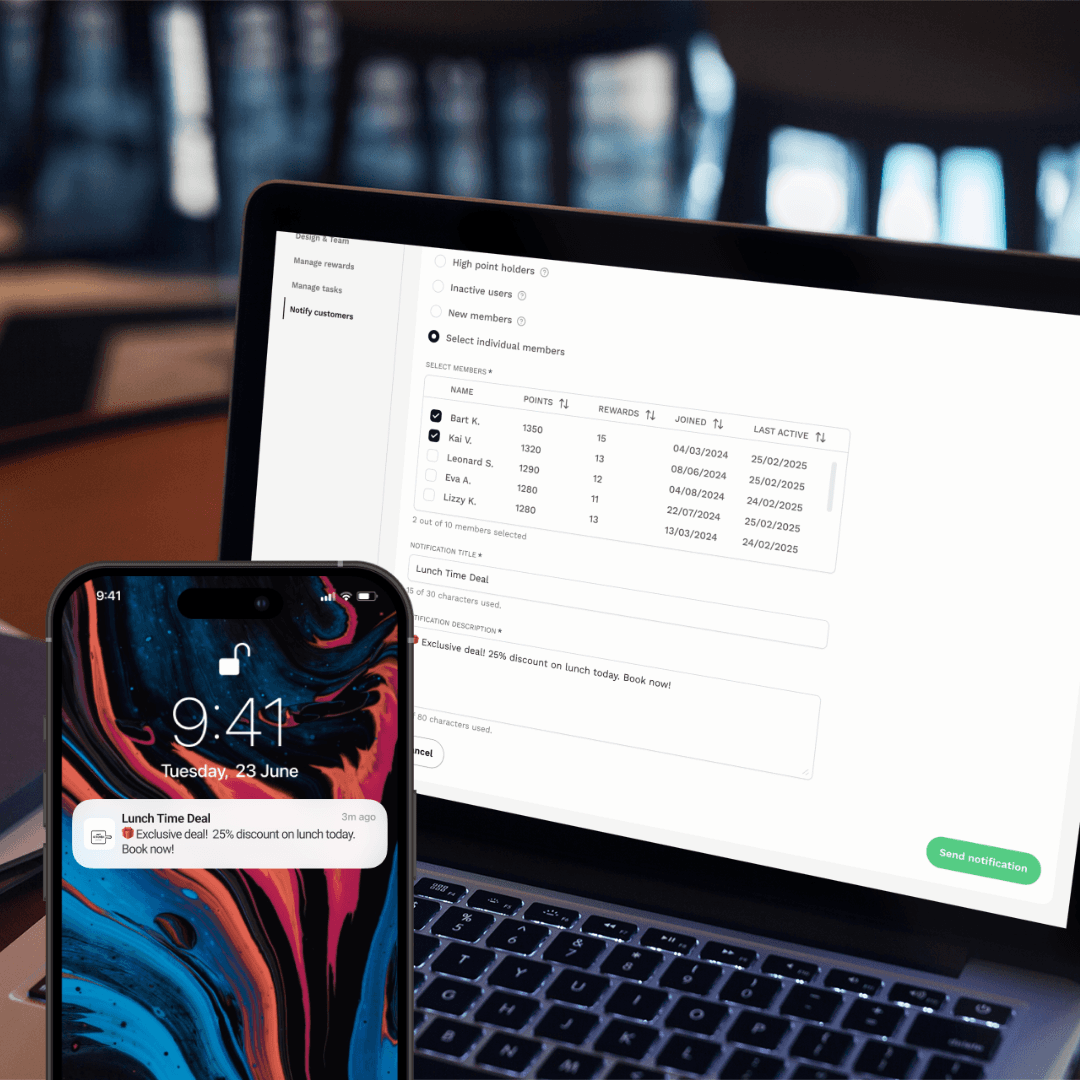
For padel clubs, loyalty analytics works best when it sits inside a broader loyalty platform rather than as a disconnected reporting tool. That way, your insights can feed directly into actions like changing a reward, launching a campaign, adjusting a tier rule or sending a targeted notification.
Authic positions loyalty analytics in exactly that way: as part of a white-label loyalty platform for clubs that want to track member growth, visit frequency, spend, reward redemptions and customer-level behavior. That includes visibility into active members, engagement decline and tier growth, alongside tools such as a white-label app, campaign builder, QR scan flows, VIP mechanics, anti-fraud controls and API integrations.
For clubs that want to move fast, that setup matters. It reduces the gap between insight and execution, so your team can see what is happening and act on it without rebuilding the loyalty program every time you learn something new.
Common mistakes padel clubs make with loyalty analytics
Tracking sign-ups but not active usage
Measuring redemptions without checking repeat-visit impact
Using one generic campaign for every player segment
Ignoring off-peak behavior in the reporting
Looking at top-line revenue without member-level retention trends
Running loyalty in a silo without booking or POS integrations
These mistakes usually lead to a program that looks active on paper but does not meaningfully improve player loyalty.
How to choose the right loyalty analytics setup for your club
If you are comparing options, start with the questions your club actually needs answered. Do you want to improve repeat play, increase off-peak occupancy, grow referrals, or understand which rewards are worth funding? Your reporting setup should map directly to those goals.
Look for a platform that gives you:
clear player-level visibility
real-time or near real-time performance tracking
reporting on member growth, frequency, spend and redemptions
tier and retention analysis
campaign measurement
integrations with booking and POS tools
an easy path from insight to action
For many padel clubs, the best choice is not the system with the longest dashboard. It is the one that helps your team make faster and better decisions around player loyalty, including customer loyalty KPIs and metrics that actually influence retention and revenue.
FAQ about loyalty analytics for padel clubs
What is loyalty analytics for padel clubs?
Loyalty analytics is the reporting and insight layer behind a loyalty program. It helps padel clubs track member growth, visit frequency, spend, reward redemptions, retention and churn signals so they can improve player loyalty and revenue.
Which metrics matter most for a padel club loyalty program?
The most useful metrics are enrollment rate, active member rate, repeat visit rate, member spend, redemption rate, referral performance and retention by tier or segment. Together, they show whether your program is driving real behavior change.
Can loyalty analytics help increase off-peak bookings?
Yes. If your platform tracks campaign performance and booking behavior, you can measure whether off-peak incentives, bonus points or targeted rewards actually shift demand into quieter time slots.
Why is player-level data important?
Player-level data helps you see which members are highly engaged, which are slowing down, and which campaigns or rewards affect different segments. That makes personalization and reactivation far more effective than using only club-wide averages.
Should loyalty analytics connect to booking and POS systems?
Ideally, yes. Booking integrations help you track play frequency and court usage, while POS integrations help you measure additional spend. Together, they create a more complete view of player value.
Is loyalty analytics a standalone tool?
It can be, but for most padel clubs it works better as part of a wider loyalty platform. That way, insights can directly inform rewards, campaigns, tiers and communication instead of sitting in a separate dashboard.
How quickly can a padel club start using loyalty analytics?
That depends on the platform and integrations, but modern no-code loyalty systems can often go live quickly. Authic states that most customers launch their loyalty program within 48 hours, which helps clubs start measuring results sooner and calculate ROI for your padel club loyalty program.

Founder & CEO
Founder & CEO of Authic. Wouter helps businesses build lasting customer relationships through branded loyalty apps that drive engagement, repeat visits, and growth.

Continue reading



We provide the technology and simplicity to turn customers into loyal fans, without the complexity or cost of building it yourself.