Fast, no code setup
Increase sales on autopilot

The best salon loyalty program ideas do one thing well: they give clients a clear reason to come back sooner and spend more over time. For salons, spas, barbershops, and beauty businesses, that usually means simple rewards, low-friction sign-up, and incentives that fit real booking behavior. If your loyalty program is too complicated, too slow, or too expensive to sustain, clients lose interest and your margin disappears.
In this guide, you’ll find practical salon loyalty program ideas you can actually use, from points and stamp cards to referrals, paid memberships, tiers, birthday rewards, and off-peak campaigns. You’ll also see how to choose the right structure, which rewards work best, what to avoid, and how to make a hair salon loyalty program feel valuable without over-discounting.
What makes a salon loyalty program work
A strong salon loyalty program is built around repeat behavior, not just discounts. The goal is to reward the actions that matter most to your business: rebooking, returning within the right time window, bringing in friends, buying retail, booking add-ons, or filling quieter slots.
In practice, the most effective programs have a few things in common:
Simple rules - clients understand how to earn and redeem rewards right away
Fast progress - the reward feels achievable within a realistic number of visits
High perceived value - the reward feels exciting without costing you too much
Clear fit with your services - rewards support your booking model, retail strategy, and margins
Consistent visibility - clients are reminded of their progress before they disappear
This is why the best salon loyalty card ideas are rarely the most complex. A program can be digital, app-based, white-label, or connected to your existing booking and POS setup, but the core still needs to be easy to follow.
How to choose the right loyalty model for your salon
Before looking at individual salon loyalty program ideas, choose the model that fits your business. A haircut-focused salon with regular visits has different needs than a beauty clinic with larger but less frequent appointments. Your reward structure should match your booking cycle, average ticket, and client journey.
Visit-based loyalty
This model rewards clients after a set number of visits. It is one of the easiest options for a hair salon loyalty card idea because clients instantly understand the mechanic. For example, after six visits, they unlock a free add-on or service credit.
Visit-based loyalty works well when your services are recurring and relatively predictable, such as haircuts, blow-dries, brow treatments, barber visits, and maintenance appointments.
Points-based loyalty
A points system gives clients rewards based on spend or specific actions. They can earn points from bookings, product purchases, check-ins, referrals, or campaign participation. This gives you more flexibility than a simple stamp card and helps you steer behavior more precisely.
It is a strong option if you want to combine service revenue with retail, promotions, and marketing campaigns.
Tiered loyalty
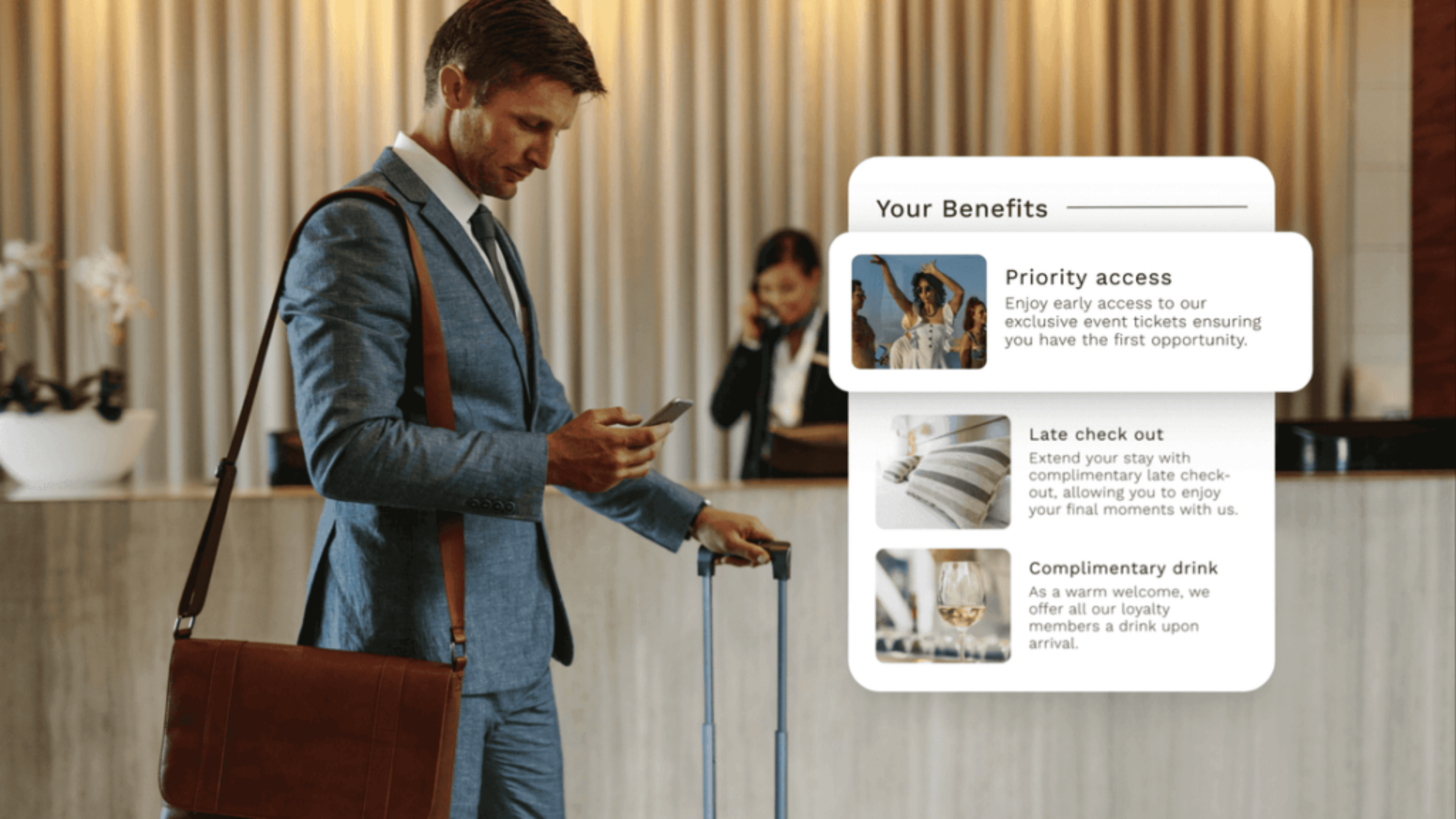
Tiered loyalty programs add levels such as Silver, Gold, and VIP. Clients unlock better perks as they spend more or visit more often. This creates status and gives your top clients a reason to stay engaged.
Tiered programs are especially useful when you want to reward your highest-value clients differently from occasional visitors.
Referral-led loyalty
If growth through word of mouth is a big priority, a referral mechanic can sit inside your loyalty program. Existing clients earn a reward when a friend books and completes a visit. This works well for salons with strong local reputation and visually shareable results.
Paid membership
A paid membership gives clients recurring perks in exchange for a monthly or annual fee. This model can work very well, but only when the value is obvious and the offer is tightly designed. It tends to fit salons with frequent-use services, premium positioning, or clients who value exclusivity and convenience.
12 salon loyalty program ideas that are practical and profitable
Below are salon loyalty program ideas that work across hair salons, beauty salons, barbershops, and wellness businesses. Not every idea suits every business, but each one can be adapted to your pricing, treatment menu, and client behavior.
1. Reward every sixth or eighth visit
This is one of the simplest and strongest salon loyalty card ideas. Instead of asking clients to wait too long, give them a target that feels reachable. For many salons, six to eight visits is a realistic threshold. It is long enough to protect margin, but short enough to keep momentum.
To make it stronger, add a smaller milestone earlier in the journey. For example:
Visit 3 - free add-on upgrade
Visit 6 - service credit or premium add-on
Visit 8 - bigger reward or VIP unlock
This works especially well for hair salon loyalty program ideas because the gap between appointments can be several weeks. An early reward helps clients feel progress before interest fades.
2. Use points for bookings, retail, and referrals
A points-based structure gives you more ways to reward behavior than a traditional beauty loyalty card idea. Instead of rewarding only visits, you can connect points to actions that support retention and revenue.
Bookings - points for completed appointments
Retail purchases - points for home-care products
Referrals - bonus points when a friend completes a visit
Check-ins - reward in-store engagement
Campaign actions - points for joining a challenge or seasonal promotion
This model is ideal if you want one system that covers service, product, and referral growth at the same time. It is also easier to personalize, because different clients can be nudged toward different actions without changing the overall structure.
3. Offer free add-ons instead of heavy discounts
One of the most effective salon loyalty program ideas is also one of the most overlooked: reward clients with high-value add-ons rather than giving away core services. A scalp massage, gloss, brow tint, conditioning treatment, travel-size product, or styling upgrade often feels more premium than a percentage discount, while costing you less.
This protects margin and keeps the program from training clients to wait for discounts. It also helps you introduce services they may book again later at full price.
Good loyalty rewards often have this formula: low operational cost, high perceived value, and strong relevance to the main appointment.
4. Create tiered rewards for your best clients
If you want to reward top spenders without giving the same perk to everyone, tiers are a smart structure. A client who visits every six weeks, buys retail, and refers friends should not necessarily get the same treatment as someone who visits twice a year.
Example tier structure:
Silver - birthday perk and member-only offers
Gold - priority booking and bonus points windows
VIP - exclusive bundles, early access, premium perks
Tiered loyalty works particularly well in premium salons and clinics because it creates status. It also gives clients a reason to consolidate more of their spend with your business rather than splitting it elsewhere.
5. Reward referrals inside the loyalty program
Referral rewards are one of the easiest ways to turn existing loyalty into new client growth. Instead of creating a separate referral system that feels disconnected, build it into the same loyalty experience.
Examples include:
Give both people bonus points after the first completed visit
Unlock a reward stamp for each successful referral
Offer a service credit for bringing in a new client
Give access to a member-only reward after two referrals
This works well for salons because recommendations are highly trust-based. If someone sees a great cut, color, facial, or treatment result, they are already halfway to asking where it was done.
6. Add birthday rewards that bring people back
Birthday offers are common because they work, but they work best when they create a visit rather than simply handing out a discount. A birthday reward should feel personal while still supporting a booking.
Good examples include a free add-on with any appointment, bonus points during birthday month, or a member-only upgrade that can be redeemed within a limited period.
For beauty salon loyalty card ideas, birthday rewards are especially useful because they are easy to automate and easy for clients to understand. They also create a natural reason to re-engage lapsed customers.
7. Run off-peak multipliers to fill quieter periods
Loyalty can do more than drive retention. It can help you shift demand. If midweek, mornings, or a certain season tends to be slower, use bonus points or limited-time rewards to make those slots more attractive.
Examples:
Double points on Tuesday and Wednesday
Extra stamp for appointments before 2 pm
Seasonal challenge with a reward for two visits in one month
Bonus retail points during quiet periods
This is one of the most commercially useful salon loyalty program ideas because it supports occupancy without relying on blanket discounts.
8. Bundle services into member-only reward packages
Bundles can increase average order value while making the program feel premium. Instead of rewarding clients with a single item, package treatments or add-ons together in a way that encourages trial and upsell.
Examples include a color-care bundle, a blow-dry package, a skin maintenance bundle, or a seasonal self-care reward set. For salons and beauty brands using a more advanced loyalty setup, bundles can be unlocked with points, reserved for certain tiers, or offered as invite-only rewards.
This approach works particularly well when you want your loyalty program to feel like more than a discount engine.
9. Reward non-purchase actions that increase retention
Not every valuable action is a purchase. Some of the best hair salon loyalty program ideas include rewards for behaviors that strengthen the client relationship without creating discount pressure.
Signing up for the loyalty program
Completing a profile
Booking the next appointment before leaving
Checking in for a visit
Referring a friend
Joining a campaign or challenge
This helps the program feel more engaging and less transactional. It also gives you more touchpoints to motivate behavior between appointments.
10. Launch invite-only VIP groups
Not every loyalty idea needs to be public or available to everyone. Invite-only groups can be used for your highest-value clients, early adopters, or people who book premium treatments. This creates exclusivity and gives you room to offer more curated perks.
Examples include early booking access, private product drops, premium event invitations, limited bundles, and concierge-style communication. Invite-only models work best when they feel genuinely special, not just like the same offer with a different label.
11. Test paid memberships for high-frequency services
Paid memberships are not right for every salon, but they can work well when your services are frequent, standardized, and easy to package. A membership might include a monthly blow-dry, bundled grooming sessions, fixed discounts on add-ons, or access to member-only benefits.
The key is clarity. Clients should instantly understand what they pay, what they get, and why it is worth joining. If the math is vague, adoption will be weak. If the benefit is too generous, your profit disappears.
12. Turn loyalty into seasonal challenges
Challenges are a good way to keep the program feeling active. Rather than waiting for clients to remember your reward system, create campaigns with a short timeframe and visible goal.
Examples include:
Complete two visits this month and unlock bonus points
Buy one treatment and one product to earn a bundle reward
Refer a friend this season and get a member bonus
Book during a slow month to unlock a premium add-on
This format works well in a digital loyalty environment because progress, reminders, and rewards can all be tracked automatically.
Best rewards for salon loyalty programs
The reward is where many loyalty programs go wrong. If it feels weak, clients ignore it. If it is too generous, it damages your margin. The best rewards usually sit in the middle: they feel attractive, are easy to explain, and support future spend.
Reward type | Why it works | Best use case
|
|---|---|---|
Free add-on | High perceived value, controlled cost | Hair salons, spas, barbershops, beauty clinics |
Service credit | Encourages another booking | Repeat visit campaigns |
Bonus points | Flexible and easy to use in campaigns | Points-based loyalty |
Retail sample or travel-size product | Introduces product with low cost | Retail upsell programs |
Priority booking | Strong non-discount perk for loyal clients | Tiered and VIP programs |
Exclusive bundle access | Makes the program feel premium | Membership and VIP offers |
Rewards to be careful with
Large percentage discounts - they can erode value and train clients to wait
Free core services too often - these quickly become expensive
Complicated redemption rules - friction kills usage
Generic rewards unrelated to your salon - they feel forgettable
Hair salon loyalty card ideas vs digital loyalty programs
Traditional loyalty cards still appeal because they are familiar and easy to hand out. For some small salons, a simple paper card can be enough to start. But for many businesses, digital loyalty is easier to scale and much easier to manage consistently.
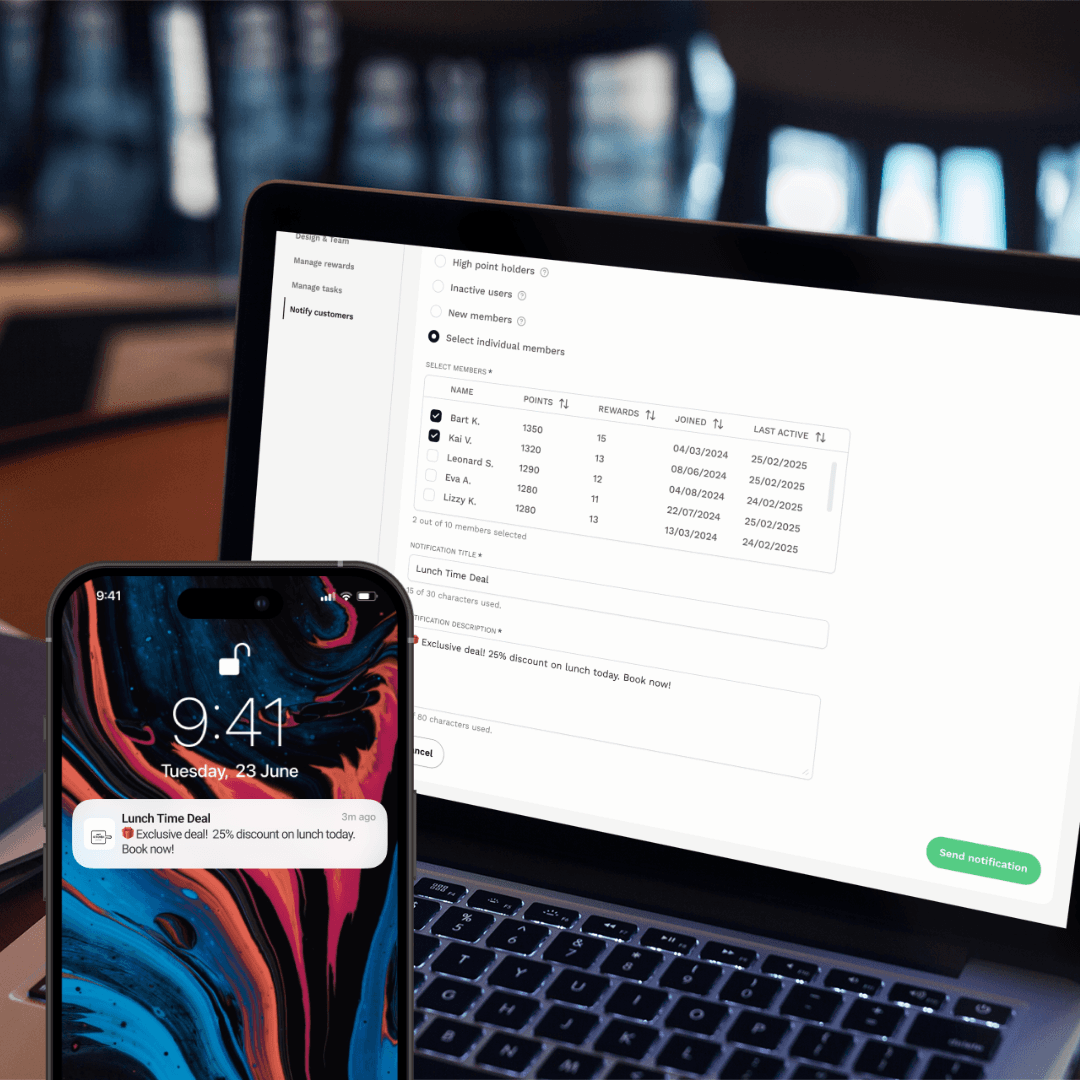
A digital setup allows you to track points or stamps automatically, send reminders, run campaigns, segment clients, and connect loyalty to bookings, purchases, and referrals. It also reduces the problem of lost cards and makes progress visible between visits.
That matters in salons where the gap between appointments may be weeks rather than days. If clients never see their progress until they return, the program loses momentum. Digital loyalty keeps the relationship active between visits.
For businesses that want a branded experience, a white-label loyalty app can make the program feel like part of your salon rather than a third-party tool. That is especially useful if you want to combine points, rewards, challenges, referrals, tiers, wallet passes, and notifications in one system.
How to launch a salon loyalty program without overcomplicating it
A lot of loyalty programs fail because they try to do too much from day one. The best approach is to start with one clear goal, one clear mechanic, and one or two core rewards.
Step 1: Choose the goal first
Decide what you want the program to improve most:
More repeat bookings
More referrals
Higher retail sales
More off-peak bookings
Higher average spend
Your goal determines the structure. A rebooking problem often suits visit-based loyalty. A retail goal may fit points. A premium retention goal may suit tiers or memberships.
Step 2: Keep the rules easy to explain
If your front desk or team needs two minutes to explain the program, it is probably too complex. A client should understand the value in one short sentence. Simplicity improves sign-up, usage, and staff adoption.
Step 3: Start with rewards you can sustain
Do not build your program around rewards that look exciting in week one but hurt profitability by month three. Choose perks with controlled cost and track how often they are redeemed.
Step 4: Launch to existing clients first
Your best first audience is usually the people already visiting you. They are easiest to enroll, easiest to motivate, and most likely to respond to a new benefit. In some cases, giving them starting credit based on recent visits can create early momentum.
Step 5: Promote it in every client touchpoint
At checkout
In booking confirmations
In reminder emails or SMS
On your website
On social media
In-salon signage
If clients do not see the program repeatedly, it will not become part of their routine. Once the structure is in place, think about how to announce your salon loyalty program clearly across those channels.
Common mistakes to avoid
The fastest way to weaken a loyalty program is to make it hard to earn, hard to remember, or too expensive for the business. These are the mistakes that show up most often.
Making the reward too far away
If clients need too many visits before they get anything, motivation drops. This is especially risky in hair and beauty because appointments may be spaced far apart.
Using discounts as the default answer
Discounts are easy to launch but often weak in the long run. They reduce perceived value and make the program feel interchangeable with any ordinary promotion.
Running the program manually with no visibility
If progress is not tracked clearly and clients are not reminded, the program becomes passive. That makes it easy to forget and hard to optimize.
Not linking loyalty to real business goals
A loyalty program should change behavior you care about. If it does not support retention, rebooking, referrals, spend, or occupancy, it is just another marketing layer without a clear return.
Metrics to track after launch
You do not need dozens of KPIs, but you do need a few useful ones. These numbers help you see whether your salon loyalty program ideas are driving meaningful results.
Repeat visit rate - are more clients returning after their first appointment?
Visit frequency - are clients coming back sooner or more often per year?
Average spend per visit - are loyalty members spending more?
Referral conversions - how many new clients come through existing members?
Reward redemption cost - are rewards financially sustainable?
Program participation - how many active clients actually use the program?
These metrics help you refine the program over time. If sign-up is high but usage is low, the reward may be weak. If redemptions are high but profit is poor, the reward design may need work. If participation is low, the issue may be visibility rather than value. It is also worth tracking how to calculate loyalty program ROI so you can judge performance beyond sign-ups alone.
When a branded digital loyalty setup makes more sense
If you want more than a basic card, a branded digital loyalty setup can give you much more control. This is especially relevant for salons and beauty businesses that want loyalty to be part of their own brand experience rather than a generic add-on.
For example, a white-label loyalty app can support points, rewards, tiers, referrals, invite-only memberships, paid memberships, stamp cards, wallet passes, notifications, and campaign challenges in one place. It can also connect with your booking, POS, and e-commerce systems, making loyalty easier to manage without creating extra manual work for your team.
That matters when you want to reward actions beyond appointments, such as check-ins, purchases, referrals, or seasonal campaign engagement. It also matters when you operate across multiple locations and need one central view of loyalty performance.
For salons looking to grow with a more advanced setup, this kind of infrastructure makes it easier to test and optimize different salon loyalty program ideas without rebuilding the program every time.
FAQ about salon loyalty program ideas
What is an example of a salon loyalty program?
A simple example is a visit-based program where a client earns one stamp for every completed appointment and receives a free add-on after six visits. Another common option is a points-based model where clients earn points on bookings, retail purchases, and referrals, then redeem those points for rewards.
What are some examples of loyalty programs for salons?
Popular examples include punch cards, points systems, tiered rewards, referral rewards, birthday offers, paid memberships, VIP groups, service bundles, and off-peak bonus campaigns. The best format depends on your booking cycle, pricing, and goals.
What are the best hair salon loyalty program ideas?
Strong hair salon loyalty program ideas include rewarding every sixth or eighth visit, offering free add-ons instead of large discounts, using bonus points for rebooking, and adding referral rewards that bring in new clients. Hair salons also benefit from reminder-driven digital loyalty because appointments are often weeks apart.
Do salon loyalty programs really increase retention?
They can, as long as the program is designed around repeat behavior and not just generic discounts. A good loyalty program gives clients a reason to rebook, return sooner, and stay engaged between visits. It works best when paired with clear communication and visible progress. If adoption is a challenge, focus on ways to increase loyalty program participation after launch.
Are salon loyalty cards still worth using?
Yes, especially if you need a simple way to start. Physical cards are easy to launch and easy for clients to understand. But digital loyalty usually gives you better tracking, reminders, automation, and campaign flexibility, which becomes more important as your business grows.
What rewards work best in a beauty loyalty card idea?
Rewards with high perceived value and controlled cost usually perform best. Examples include free add-ons, service credits, bonus points, exclusive bundles, birthday perks, travel-size products, and early access benefits. These feel more premium than constant discounts.
How many visits should a salon reward?
For many salons, six to eight visits is a strong range. It feels achievable without giving rewards away too quickly. If your visit cycle is longer, adding a smaller reward around visit three or four can help maintain interest.
Should a salon use points or a stamp card?
Use a stamp card if you want maximum simplicity. Use points if you want more flexibility and want to reward multiple actions like bookings, purchases, check-ins, and referrals. A points system is usually better for salons that want to personalize campaigns or connect loyalty to several channels.
What should you avoid in a salon loyalty program?
Avoid rewards that cost too much, redemption rules that are hard to understand, and thresholds that take too long to reach. Also be careful not to make the whole program dependent on discounts. The goal is to increase loyalty, not lower your perceived value.
Can a salon loyalty program work across multiple locations?
Yes, as long as the system is centralized and consistent. Multi-location businesses benefit from shared rules, unified analytics, and a loyalty experience that works the same way across every site. Digital loyalty is usually much easier to manage in this setup than paper-based systems.

Founder & CEO
Founder & CEO of Authic. Wouter helps businesses build lasting customer relationships through branded loyalty apps that drive engagement, repeat visits, and growth.

Continue reading


We provide the technology and simplicity to turn customers into loyal fans, without the complexity or cost of building it yourself.