Fast, no code setup
Increase sales on autopilot
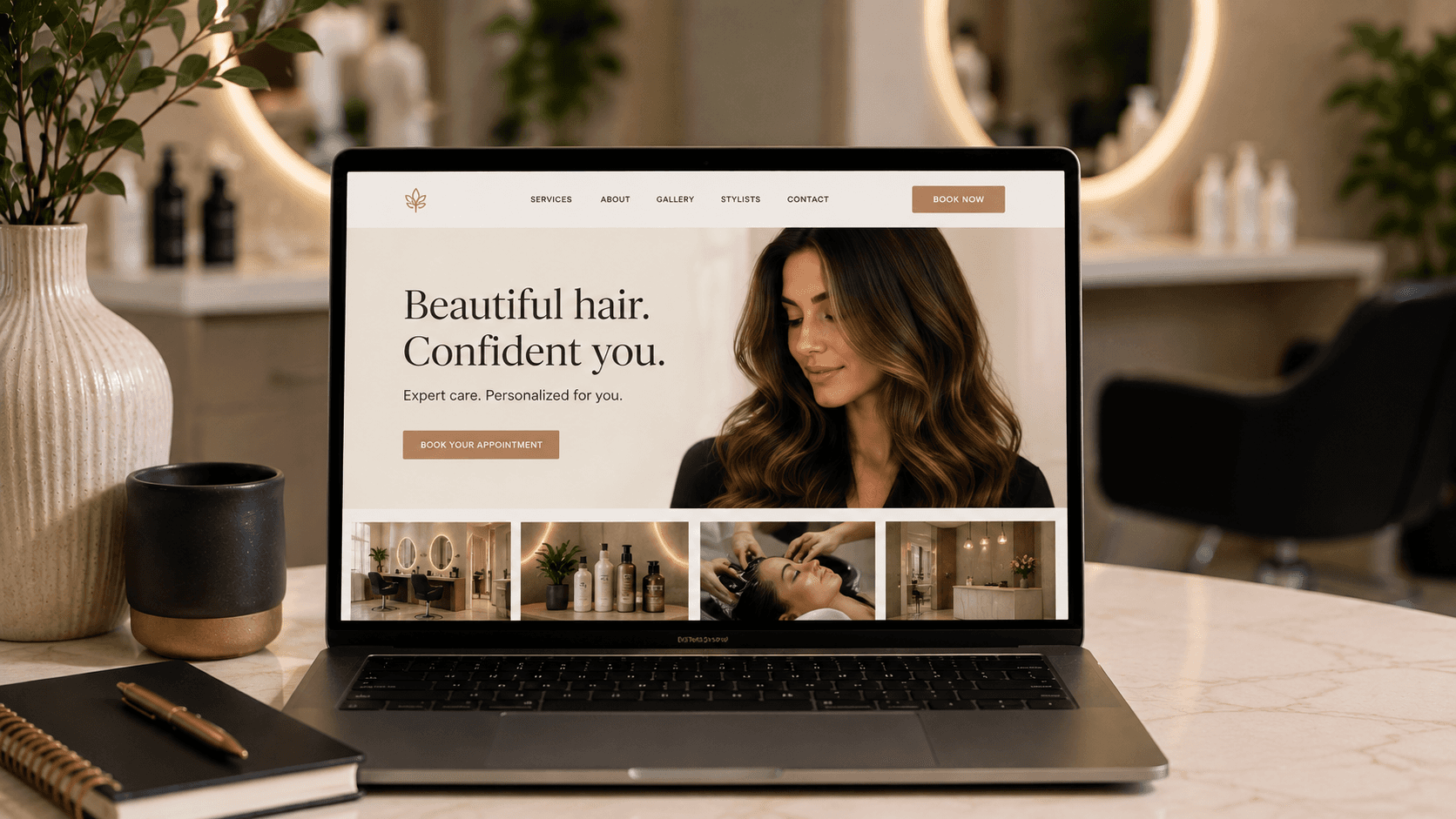
Great salon websites do more than look beautiful. They explain what you do, who you help, why your salon feels different, and what someone should do next. That is where salon website copywriting makes the difference between a site that gets admired and a site that gets bookings.
If you run a hair salon, beauty salon, barbershop, spa, or clinic, your visitors are not only judging your photos. They are also scanning your words for signs of trust, fit, expertise, price clarity, and personality. The right website copy helps people feel, “Yes, this place is for me.”
This guide breaks down how to write salon website copy that is clear, conversion-focused, and easy to adapt to your brand. You will learn what to write on a salon website, how to make a stylist website stronger, how to start website copywriting without sounding generic, and what beauty copywriting really needs to do to win more clients.
Why salon website copy matters more than most salon owners think
Many salon websites rely heavily on visuals. Strong imagery matters, but photos alone rarely answer the questions that lead to bookings. A visitor still wants to know whether your salon matches their style, budget, expectations, and comfort level.
Good salon website copywriting closes that gap. It helps you explain your services in plain language, show the benefits behind each treatment, communicate your salon atmosphere, and guide visitors toward a clear next step. Without that clarity, even a beautiful site can feel vague.
Strong copy also improves discoverability. Search engines need text to understand what your website is about. If your pages clearly describe your services, audience, and expertise, your site has a better chance of appearing for relevant searches. That makes website copy both a conversion tool and a visibility tool, especially when it supports local SEO for salons.
What salon website visitors want to understand before they book
Before someone books, they are usually trying to reduce uncertainty. Your copy should answer the questions behind that hesitation quickly and naturally.
What services do you offer?
Who are those services best for?
What result can the client expect?
What makes your salon different from other options nearby?
Who will they be working with?
How do they book, and what happens next?
When your copy addresses these points clearly, your website starts doing real sales work. It reduces friction, builds trust, and makes the booking decision feel easier.
How to start website copywriting for a salon
If you are wondering how to start website copywriting, begin with strategy before wording. Many salon websites sound generic because they jump straight into writing lines like “we are passionate about beauty” or “we offer high-quality services.” Those phrases are common, but they do not create a reason to choose you.
Start with four basics:
Audience: Who do you most want to attract?
Offer: What services or specialties drive bookings?
Positioning: Why choose your salon instead of another one?
Voice: Should your brand sound luxurious, warm, edgy, clinical, playful, or minimalist?
Once these are clear, writing gets easier. You are no longer trying to sound impressive. You are trying to sound right for the people you want to attract.
Build your messaging around benefits, not just features
One of the biggest mistakes in salon website copywriting is focusing too much on features. Features are facts about what you use or offer. Benefits explain why that matters to the client.
For example, saying you use premium products, advanced color techniques, or a detailed consultation process is fine. But on its own, that information is incomplete. The client cares most about what those things mean for them: healthier hair, more predictable results, less damage, longer-lasting color, or more confidence in the final look.
This shift matters on nearly every page of a salon website. Service pages, homepage sections, and treatment descriptions become much stronger when they answer the unspoken question, “What do I get out of this?”
Feature | Benefit-focused version
|
|---|---|
We use premium color products | Enjoy richer color, better shine, and a healthier finish |
We offer advanced skin treatments | Target visible concerns with treatments tailored to your skin goals |
Detailed consultation included | Feel confident that your treatment is matched to your needs before you commit |
Experienced stylists | Get expert guidance and results that suit your hair, lifestyle, and preferences |
Avoid jargon and write the way clients think
Salon owners and stylists often know their craft so well that they write from the inside out. The problem is that clients do not always search or think in professional terminology. They are more likely to want help with outcomes than with technical explanations.
That does not mean your copy should sound simplistic. It means it should translate expertise into language that is easy to understand. If you mention a specific treatment, method, or technology, explain it in terms of the visible or practical result.
For example, instead of loading a page with treatment names and brand terms, explain who the service is for, what problem it helps with, what the experience feels like, and what kind of result someone can expect. Clear copy builds trust faster than complicated copy.
Use customer psychology, not just demographics
Good beauty copywriting goes beyond age, location, and budget. Demographics can help, but they rarely tell you how to write words that make someone feel understood. For that, you need to think about motivations, worries, and desired outcomes.
A salon client may want a haircut, but the deeper reason might be wanting to feel polished for a new job, low-maintenance for a busy schedule, more confident after a difficult period, or more aligned with their personal style. Those emotional layers shape stronger website copy than surface-level descriptions alone.
Ask questions like these when planning your messaging:
What is your ideal client tired of?
What are they hoping will be different after the appointment?
What makes them nervous about choosing a new salon?
What kind of salon experience do they value most?
What words would they use to describe their goal?
The more clearly you understand those answers, the easier it is to write copy that feels relevant instead of generic.
How to create a website for a beauty salon that actually converts
If you are asking how to create a website for a beauty salon, the structure matters as much as the design. A high-converting salon website usually gives visitors a clear path from interest to action. That means every main page should have a job.
Homepage
Your homepage should quickly explain what you offer, who it is for, and why people choose you. This is not the place for vague slogans that could fit any salon. Aim for clarity first, then style.
Service pages
Each key service or category should have its own page with clear descriptions, benefits, ideal client fit, and a booking path. This helps both SEO and decision-making.
About page
Your About page should build trust and help visitors understand your salon personality, values, and experience. It should feel human, not corporate.
Team or stylist bios
These help people feel more comfortable before they ever step inside. A strong bio can create familiarity and reduce booking hesitation.
FAQ page
FAQs reduce friction around common concerns like pricing, cancellations, patch tests, appointment timing, and new-client expectations.
Contact or booking page
This page should make the next step obvious. Include booking options, what to expect, and any useful guidance for first-time clients.
What to write on a salon website page by page
If you are stuck on what to write on a salon website, use this practical breakdown.
Homepage copy
A clear headline that says what you do and who you help
A short supporting paragraph with your positioning
Featured services or specialties
Why clients choose your salon
A simple call to action
Service page copy
What the service is
Who it is best for
Main benefits and outcomes
What the appointment may involve
Any useful prep or aftercare information
Booking CTA
About page copy
Your story or approach
Your values and salon experience
What type of clients you serve best
What makes your environment feel different
Stylist bio copy
Name and role
Specialties
Approach or personality
Ideal client fit
A human detail that makes the bio memorable
The About page is often the most underrated conversion page
For many salons, the About page gets real traffic because people want reassurance before booking. They may like your photos and service menu, but they still want to know who is behind the brand and whether your salon feels like the right fit.
This page should not read like a résumé pasted onto a website. It should connect your experience and philosophy to the client experience. Why does your salon exist, what do you care about, and what can someone expect when they choose you?
This is also the right place to communicate your atmosphere more clearly. Are you known for calm luxury, creative transformations, lived-in hair, modern skin treatments, or a welcoming space for clients who have felt overlooked elsewhere? Those signals matter.
When written well, the About page helps visitors picture themselves in your salon. That emotional fit can be the final push toward a booking.
How to make a stylist website feel personal and persuasive
If you want to know how to make a stylist website stronger, start by removing generic language and adding more specificity. Clients do not want to book with a faceless business. They want to feel they are choosing a person or team they can trust.
A stylist website works best when it combines expertise with personality. That does not mean oversharing. It means writing in a way that helps a potential client decide whether your style, communication, and specialties match what they need.
Good stylist website copy often includes:
Your signature services or strongest specialties
The type of client you love working with
Your approach to consultations and recommendations
Your style point of view
A booking invitation that feels natural and low-friction
Even a short bio can do a lot of work when it sounds grounded, clear, and client-aware.
Storytelling helps salon copy connect faster
One of the strongest patterns in high-performing salon content is storytelling. Not storytelling in the sense of writing long dramatic paragraphs, but in the sense of placing the client inside a journey. They have a problem, a frustration, a goal, or a desired transformation. Your salon helps guide them there.
This approach is more persuasive than simply listing credentials. Expertise still matters, but people often book because they feel understood. Website copy becomes stronger when it reflects the before-and-after reality clients care about.
For example, instead of saying a treatment uses advanced techniques, you might frame it around the client who wants smoother mornings, healthier-looking hair, or a skin plan that finally feels tailored to them. That shift makes your message more human and more memorable.
You can apply light storytelling to:
Homepage hero sections
Service introductions
About page sections
Stylist bios
Booking page reassurance copy
Salon website copywriting examples by section
These short examples show the difference between vague copy and clearer, conversion-focused website copy.
Homepage headline example
Weak: Welcome to our salon
Stronger: Modern hair color and cuts tailored to your style, schedule, and hair goals
Service description example
Weak: We offer advanced balayage using premium products
Stronger: Get dimensional, lower-maintenance color designed to grow out beautifully between appointments
About section example
Weak: We are passionate about making clients feel beautiful
Stronger: We created a salon experience that combines expert results with honest guidance, so you leave with a look that fits your real life, not just the photo you brought in
Stylist bio example
Weak: Sarah is an experienced stylist who loves hair
Stronger: Sarah specializes in soft blonding and lived-in color for clients who want bright, natural-looking results without high-maintenance upkeep
How beauty copywriting supports both SEO and bookings
Some salon owners separate SEO from conversion, but on a well-written site they support each other. Beauty copywriting that clearly explains services, results, and target audiences helps search engines understand your pages and helps visitors decide whether to book.
This usually means creating focused pages for meaningful services rather than stuffing everything onto one page. It also means using natural language people actually search for, such as haircut, balayage, facial, brow shaping, color correction, or skin treatment, while still keeping the copy readable and brand-aligned.
SEO-friendly salon copy is not about cramming in keywords. It is about matching real search intent with useful page content. If someone lands on a service page, they should immediately find the information they expected from the search result.
Where salon websites often lose bookings
Even attractive salon websites can underperform when the copy creates friction. These are common issues:
Unclear headlines that do not explain the offer
Too much focus on the salon and not enough on client outcomes
Heavy use of jargon or brand names without explanation
Thin service pages with no real decision-making help
Weak stylist bios that do not create connection
No guidance for first-time clients
Calls to action that are vague or easy to miss
Fixing these issues usually does not require more words everywhere. It requires better words in the places that matter most.
Clear calls to action make copy perform better
Every important page should make the next step obvious. After reading your copy, a visitor should not have to guess what to do. Your call to action can be simple, but it should be specific and relevant to the page.
Examples include:
Book your appointment
View services and pricing
Meet the team
Start with a consultation
Find the right stylist for you
The best CTA depends on where the visitor is in the decision process. Someone on the homepage may want to explore. Someone on a service page may be ready to book. Someone on a stylist bio may want to choose a provider first. Following online booking conversion best practices can help make those next steps more effective.
FAQ
What is salon website copywriting?
Salon website copywriting is the writing used on a salon website to explain services, build trust, communicate brand personality, support SEO, and encourage bookings. It includes homepage copy, service pages, About pages, stylist bios, FAQs, and calls to action.
What is a beauty copywriter?
A beauty copywriter is a writer who creates marketing and website content for beauty-related businesses such as salons, spas, clinics, skincare brands, and barbershops. Their job is to turn treatments, products, and brand positioning into clear, persuasive messaging.
How long should salon website copy be?
It should be long enough to help someone make a decision, but not padded. Homepage copy is usually shorter and sharper. Service pages often need more detail because they support both SEO and conversion. The right length depends on the intent of the page.
Should every salon service have its own page?
Not always every single minor service, but your main revenue-driving or search-worthy services should usually have dedicated pages. This helps visitors find relevant information faster and gives search engines clearer page topics.
How do I make my salon website sound less generic?
Be more specific about who you help, what results you are known for, how your process works, and what your salon experience feels like. Avoid empty phrases that could apply to any salon, and write from the client’s point of view.
Can AI help write salon website copy?
Yes, AI can help speed up drafting, organizing ideas, and improving clarity. But it works best when you give it real brand input, service details, audience insight, and examples of your tone. AI should support your voice, not replace it.
What should be on a stylist website?
A stylist website should clearly show specialties, services, ideal client fit, bio, booking information, and examples of work. The strongest stylist websites also make the experience feel personal and easy to trust.
How does salon copywriting connect to retention after the booking?
Good copy sets expectations clearly and attracts better-fit clients, which can improve the client experience from the start. For salons focused on retention, strong website messaging can work alongside loyalty and re-engagement strategies. Platforms like Authic help salons support retention through branded loyalty experiences, rewards, referrals, and client engagement after the first visit.

Founder & CEO
Founder & CEO of Authic. Wouter helps businesses build lasting customer relationships through branded loyalty apps that drive engagement, repeat visits, and growth.

Continue reading



We provide the technology and simplicity to turn customers into loyal fans, without the complexity or cost of building it yourself.