ARTICLE
Padel Club Marketing Budget

Fast, no code setup
Increase sales on autopilot

A padel club marketing budget should do more than fund awareness. It should help you fill courts, lower your cost per booking, increase repeat play, and turn members into active advocates. If your budget only focuses on launch campaigns or paid ads, you will usually overspend on acquisition and underinvest in retention.
For most clubs, the right approach is to build a budget around the full player lifecycle: attract new players, convert them into first bookings or memberships, keep them active, and create referral momentum. That means combining paid channels with content, CRM, community activation, and loyalty mechanics that improve lifetime value.
This guide explains how to set a realistic marketing budget for a padel club, how to divide it across channels, which KPIs to track, and how to avoid the common mistake of treating marketing as a cost instead of a growth system.
How much should a padel club spend on marketing?
There is no single number that fits every club, because the right budget depends on your stage, capacity, local competition, pricing, and occupancy targets. A new club usually needs a higher percentage of projected revenue for launch and awareness. An established club with strong retention, referrals, and recurring memberships can often operate more efficiently.
As a practical benchmark, many clubs can start with a marketing budget in the range of 5% to 12% of projected annual revenue, then adjust based on performance. Clubs in launch mode or highly competitive markets may go higher in the first months. Clubs with strong word of mouth and high utilization may sit lower, provided they still invest enough in retention and CRM.
If you want a simple rule of thumb:
5% to 7% - established club with stable occupancy and strong repeat play
8% to 10% - growth-focused club expanding memberships, lessons, or off-peak demand
10% to 12%+ - new launch, new location, or aggressive local growth target
The important part is not only the percentage. It is whether the budget is linked to clear goals like booked court hours, member growth, return visits, referral revenue, and churn reduction.
What determines the right marketing budget for a padel club?
Your budget should be built from business reality, not copied from another venue. A 4-court indoor club in a city with high demand behaves differently from a suburban club still educating the local market.
Club maturity - pre-launch, early growth, or established operation
Number of courts - more capacity usually requires a broader demand engine
Occupancy targets - especially for off-peak slots and weekdays
Revenue mix - court bookings only, or also lessons, memberships, events, food and beverage, pro shop
Competitive pressure - nearby clubs, substitute sports, and local search competition
Retention strength - clubs with strong repeat behavior can spend more efficiently
Referral rate - a healthy referral engine reduces dependence on paid acquisition
If two clubs each spend €4,000 per month but one has better retention, smarter CRM, and stronger referrals, the second club will usually produce better revenue with the same spend. That is why a padel club marketing budget should always include retention and loyalty, not just awareness channels.
How to build a padel club marketing budget step by step
1. Start with revenue targets
Work backward from your business goals. Estimate monthly revenue from court bookings, memberships, coaching, leagues, youth programs, events, and secondary spend. Then define how much growth marketing needs to support.
2. Set core acquisition and retention KPIs
At minimum, track cost per lead, cost per first booking, cost per member acquired, repeat booking rate, referral rate, and revenue per active player. These metrics help you decide whether your budget is creating profitable growth.
3. Separate launch spend from ongoing spend
A launch budget is temporary and often heavier on paid reach, opening events, and local awareness. Your ongoing budget should become more balanced, with more investment in CRM, referrals, community campaigns, and retention.
4. Allocate budget by objective
Do not only allocate by channel. Allocate by purpose as well: awareness, conversion, retention, reactivation, and referrals. This makes it easier to rebalance spend when performance shifts.
5. Review monthly and reallocate quickly
A padel club should not lock its marketing budget for a full year without adjustment. Seasonality, weather, local competition, and occupancy patterns change. Monthly optimization is usually the minimum standard, and a marketing calendar template can help map spend across peak and off-peak periods.
A practical budget split for padel clubs
The exact split depends on your stage, but many clubs benefit from a structure like the one below. This keeps your budget balanced across acquisition and retention.
Budget area | Typical share | Main purpose
|
|---|---|---|
Paid social and search | 25% to 40% | Drive awareness, trial bookings, memberships, and event signups |
Content and organic social | 10% to 20% | Build visibility, trust, and recurring local engagement |
Email, CRM, and automation | 10% to 15% | Increase repeat bookings, upsell offers, reduce churn |
Loyalty and referral campaigns | 15% to 25% | Lift retention, referrals, and lifetime value |
Community events and partnerships | 10% to 20% | Create local traction, social proof, and repeat play |
Testing and optimization reserve | 5% to 10% | Experiment with new channels, creative, and offers |
This is where many clubs can improve. They often over-allocate to paid ads and under-allocate to systems that improve retention. If your club keeps players active for longer, your effective acquisition cost drops because each customer generates more revenue over time.
Launch budget vs ongoing marketing budget
Pre-launch and opening phase
Before opening, you usually need more spend on visibility and lead capture. Common priorities include local paid social, Google visibility, waitlist campaigns, opening event promotion, local partnerships, and creative production. The goal is not only reach, but also collecting first-party data before launch.
Primary goals - awareness, waitlist growth, first memberships, first bookings
Main channels - Meta ads, Google Business Profile, landing pages, email capture, local creators, opening events
KPIs - cost per lead, waitlist growth, founding member conversions, launch week occupancy
Post-launch and growth phase
Once the club is open, the budget should shift toward repeatability. You still need acquisition, but the smarter play is usually improving frequency, referrals, and off-peak usage. That is where CRM, segmentation, loyalty campaigns, and targeted incentives become more valuable.
Primary goals - retention, referrals, occupancy optimization, LTV growth
Main channels - email, app messaging, push notifications, loyalty campaigns, referral flows, targeted paid campaigns
KPIs - repeat booking rate, churn risk, referral revenue, booking frequency, revenue per player
Should you use the 70 20 10 rule for a padel club marketing budget?
The 70 20 10 rule for marketing budget can work well for padel clubs if you apply it properly. In this model:
70% goes to proven channels and campaigns
20% goes to scaling promising tests
10% goes to experiments
For a padel club, the 70% might include campaigns that reliably drive bookings or memberships, plus CRM and loyalty journeys with proven retention impact. The 20% could be new local partnerships, creator collaborations, or a refined referral flow. The 10% could be experiments like TikTok creators, corporate outreach sequences, or a new challenge-based loyalty mechanic.
This approach helps you stay disciplined. It prevents overreacting to trends while still making room for growth opportunities.
What channels usually deserve budget first?
A club does not need every channel from day one. It needs the channels most closely tied to bookings and repeat activity.
Local paid social
Meta is often effective for local reach, launch offers, social proof, and event campaigns. It works especially well for beginner-friendly messages, leagues, intro clinics, and off-peak promotions.
Google search and local visibility
Google matters when people are actively looking for padel near them, lessons, memberships, or court bookings. Your Google Business Profile, local landing pages, and branded search presence should be strong before you scale spend elsewhere. For clubs prioritizing organic local acquisition, this local SEO and Google Business Profile guide is a useful next step.
Email and CRM
Many clubs underuse email and customer segmentation. This is a mistake because repeat players often respond well to relevant reminders, seasonal offers, event invitations, and membership nudges. A structured padel club email marketing lifecycle can make this channel more efficient.
Referral marketing
Padel is naturally social, which makes referrals one of the highest-leverage budget areas. If your club can make referrals easy, visible, and rewarding, you can create compounding growth with a lower acquisition cost.
Loyalty and retention campaigns
This is where a lot of hidden budget efficiency lives. A loyalty system can help you reward frequency, encourage off-peak play, trigger reactivation, and identify high-value segments. For clubs, this often has more durable impact than simply increasing ad spend.
How much budget should go to retention and referrals?
For many padel clubs, this share should be larger than expected. A common mistake is spending 80% to 90% of budget on acquisition and leaving retention as an afterthought. A healthier model often gives 25% to 40% of the total budget to retention, CRM, referral campaigns, and loyalty activation combined.
That does not mean stopping acquisition. It means recognizing that a player who returns, brings friends, joins events, and upgrades membership is far more valuable than a one-time booking created by an ad.
Authic's position on this topic is aligned with that reality: padel marketing works best when budget allocation is tied to retention in the funnel, not only top-of-funnel reach. A club that can track lifetime value, churn risk, referral contribution, and campaign performance is in a much stronger position to optimize budget month by month.
Sample monthly marketing budgets for different padel club stages
Club stage | Indicative monthly budget | Typical focus
|
|---|---|---|
Pre-launch club | €3,000 to €8,000 | Waitlist, local awareness, opening campaigns, early memberships |
Newly opened club | €2,500 to €6,000 | Bookings, review velocity, beginner acquisition, event attendance |
Growth-stage club | €4,000 to €10,000 | Membership growth, off-peak utilization, leagues, referrals, CRM |
Mature club | €2,000 to €7,000 | Retention, churn prevention, upsell, referrals, community programming |
These are not universal numbers. They are practical planning ranges. A club in a dense city or premium segment may sit above them, while a lower-cost local model may sit below them.
How to know if your padel club marketing budget is profitable
A padel club is a profitable business when revenue per active player, occupancy, and retention are healthy enough to support the full operating model. Marketing contributes to that only when it produces measurable downstream value.
Track these KPIs closely:
Cost per lead
Cost per first booking
Cost per acquired member
Repeat booking rate
Referral rate
Revenue per active player
Lifetime value
Churn rate or churn risk
Off-peak occupancy uplift
If a campaign brings cheap leads but poor repeat behavior, it may look efficient while actually hurting profitability. If a retention campaign costs more upfront but increases frequency and referrals, it may be the better investment. In many cases, improving website conversion optimization also raises ROI before increasing spend.
Common budget mistakes padel clubs make
Putting too much into launch and too little into retention - this creates an early spike but weak long-term growth
Not separating acquisition from reactivation - inactive players need different messaging than new prospects
Ignoring off-peak demand - budget should also improve utilization, not only headline growth
Running channels without clear KPIs - every budget line should have a measurable outcome
Underfunding CRM and loyalty - repeat play is often the easiest margin improvement
Reviewing budget too slowly - monthly reallocation is usually necessary
Where loyalty fits into a padel club marketing budget
Loyalty should not be seen as a nice extra after acquisition is done. It is part of the marketing engine. When players earn rewards for activity, referrals, challenges, or membership behavior, the club can influence repeat visits and community engagement in a measurable way.
For padel clubs, loyalty can support:
Higher booking frequency through points, challenges, or tier progression
Referral growth through in-app referral flows and rewards
Off-peak demand via targeted perks and time-based incentives
Segmentation for juniors, social players, competitive players, and corporate groups
Retention visibility through analytics on lifetime value and churn risk
That is also why platforms in this space are increasingly tied to broader club growth strategy. For example, Authic focuses on loyalty mechanics and campaign tools that help sports venues connect budget decisions to repeat behavior, referral performance, and player value over time.
FAQ about padel club marketing budget
How much would it cost to market a new padel club?
A new padel club may spend anywhere from a few thousand euros per month to much more, depending on location, launch ambition, and competition. A practical starting point is building a launch budget for 3 to 6 months, then shifting toward an ongoing budget based on actual occupancy and conversion data.
Is a padel club a profitable business?
It can be, but profitability depends on occupancy, pricing, secondary revenue, operating costs, and retention. Marketing supports profitability when it helps create repeat bookings, memberships, and referrals rather than only first-time visits.
What is the 70 20 10 rule for marketing budget?
It means 70% of spend goes to proven channels, 20% to scaling promising tests, and 10% to experimentation. For padel clubs, this is a useful way to protect performance while still testing new growth ideas.
Should a padel club spend more on ads or retention?
Most clubs need both, but many should spend more on retention than they currently do. If your club keeps players active longer and increases referrals, every euro spent on acquisition becomes more effective.
What is the best channel for padel club marketing?
There is rarely one best channel. In most cases, a mix of local paid social, Google visibility, email or CRM, referral campaigns, and loyalty activation performs better than relying on one source.
How often should a padel club review its marketing budget?
Monthly is a strong baseline. That gives you enough time to collect data while still moving budget quickly toward the channels and campaigns that improve bookings, retention, and revenue. Many teams also pair this with a padel club marketing plan template to keep execution aligned with budget decisions.
Can loyalty software reduce marketing waste?
Yes, if it helps you improve retention, referrals, segmentation, and reactivation. A club that understands player behavior can allocate budget more efficiently than one that only tracks top-level ad results.

Founder & CEO
Founder & CEO of Authic. Wouter helps businesses build lasting customer relationships through branded loyalty apps that drive engagement, repeat visits, and growth.

Continue reading

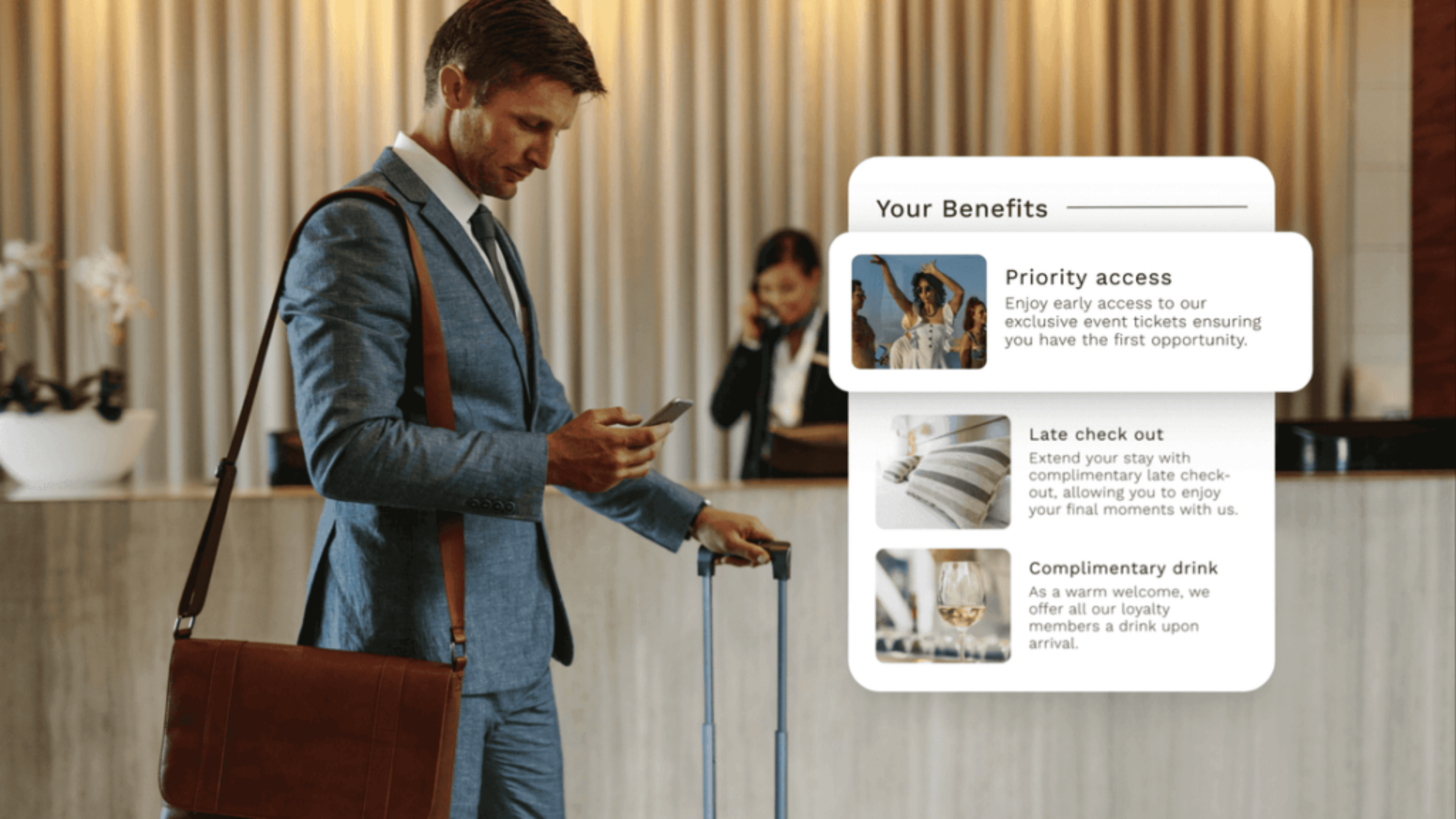

We provide the technology and simplicity to turn customers into loyal fans, without the complexity or cost of building it yourself.