ARTICLE
Which KPI measures customer loyalty?

Fast, no code setup
Increase sales on autopilot

If you want one KPI that most directly answers which KPI measures customer loyalty, Net Promoter Score is the standard for measuring the intent to recommend. But loyalty is both what customers say and what they do. To truly measure it, pair NPS with behavioral KPIs like retention rate, churn, repeat purchase frequency and RFM segmentation. Below you will find clear definitions, formulas, when to use each metric and how to turn them into growth.
The short answer, then the full toolkit
NPS measures advocacy intent. It is a fast loyalty pulse, great for benchmarking.
Retention and churn measure realized loyalty over time. They show whether you actually keep customers.
Repeat purchase frequency and RFM expose habit and value, helping you act at segment level.
Use NPS for attitude, retention or churn for behavior, and add frequency or RFM to decide what to do next.
Pick your primary KPI by business model
Business model | Primary KPI | Why it fits
|
|---|---|---|
Subscription | Churn rate or retention rate | Contract renewals reveal true loyalty month to month. |
Hospitality and services | Visit frequency and RFM | Visits and recency show habit strength and at-risk guests. |
Retail and ecommerce | Repeat purchase rate and CLV | Purchase cycles and lifetime value link loyalty to revenue. |
Multi-location stores | Offer redemption rate | Tests relevance of your loyalty offers by region and time. |
With Authic.io you can connect POS or booking systems to attribute visits and redemptions, and use the in-app experience, tiers, stamp cards and challenges to nudge the KPIs you choose to optimize.
Loyalty KPIs explained and when to use them
Net Promoter Score (NPS)
What it measures: advocacy intent. Ask customers how likely they are to recommend you on a 0-10 scale.
Formula: NPS = percentage of Promoters (9-10) minus percentage of Detractors (0-6).
Use it when you need a simple loyalty benchmark across brands, channels or locations. Track after key moments like a visit or reward redemption. Strengths: fast, comparable, directional. Limitations: it is attitudinal, not behavior, and can be sensitive to survey timing. Pair with retention or frequency to validate the signal.
Customer retention rate
What it measures: the share of customers you keep over a period.
Formula: Retention = ((customers at end minus new customers) divided by customers at start) times 100.
Use it to verify whether your loyalty program actually keeps customers returning. Improve by building early win moments, rewarding second purchases, and creating tiers that unlock perks before attrition sets in. Segment retention by cohort and location to spot where the program works best.
Churn rate
What it measures: the share of customers you lose in a period. It is the inverse of retention.
Formula: Churn = lost customers divided by customers at start times 100. For subscriptions, also track revenue churn.
Use it to identify drop-off moments and trigger win-back plays. Look at churn by tenure, last-visit recency and product category. Lower churn comes from reducing effort at key moments, timely reminders, meaningful rewards and clear value at renewal or rebooking. Tie churn insights to actions like reactivation offers, app notifications or tier protection campaigns.
Repeat purchase rate and purchase frequency
What they measure: habit. Repeat purchase rate is the percentage of customers who buy 2 or more times within a window. Frequency is average orders or visits per customer in that window.
Use them to push second and third purchases with points boosters, targeted bundles and reminders timed to expected repurchase windows. For visit-led businesses, focus on Repeat visit rate as a behavioral loyalty benchmark.
Customer lifetime value (CLV)
What it measures: the predicted net revenue or profit from a customer over their relationship.
Simplified formula: CLV = average order value times purchase frequency times lifespan times gross margin. More advanced models discount cash flows and use cohort retention curves.
Use CLV to prioritize segments, set reward economics and prove Loyalty program ROI. Growing CLV typically requires improving onboarding conversion, increasing visit frequency, nudging cross-category spend and keeping margin healthy through smart perks rather than deep discounts.
RFM segmentation
What it measures: three behavioral dimensions of loyalty. Recency is how recently someone purchased, Frequency is how often, Monetary is how much they spend.
Method: score each customer 1-5 on R, F and M, then act on segments. Loyalists are high scores on all three. At-risk are high F and M but low R. New potential are high R but low F.
Use RFM to target offers precisely. Examples: prevent churn by rewarding at-risk customers before they lapse, surprise and delight top RFM customers with VIP access, and convert new but promising customers with a challenge to reach their next tier.
Customer engagement rate
What it measures: participation in your loyalty experience, such as app sessions, check-ins, challenge completions, reward redemptions or tier progress. Include Points accrual rate and track Tier progression rate to quantify deepening engagement.
Sample formula: Engagement rate = engaged members in period divided by total members. Use it as a leading indicator for future spend and retention. Improve with timely notifications, personalized challenges and clear progress cues inside your app.
Offer redemption rate
What it measures: relevance and reach of offers to loyalty members.
Formula: Redemption = redemptions divided by distributed offers times 100.
Use it to test messaging, timing and SKU availability. Segment by store, time of day, cohort and tier. High redemption with low margin can still be a win if it lifts visit frequency or basket mix. Benchmark locations and share best practices across teams. If you run a points-based program, prioritize Reward redemption rate to connect offer uptake to the actual use and value of points.
CSAT vs CES for loyalty context
Customer Satisfaction Score reflects how satisfied a customer is with a recent interaction or visit. Typical formula is average score divided by maximum score times 100. Customer Effort Score captures how easy it was to resolve an issue or complete a task, using a simple agreement scale.
Use CSAT to monitor experience quality across touchpoints. Use CES to reduce friction at moments that cause churn, like account issues or redemptions. Both are powerful loyalty drivers when you close the loop quickly with fixes and proactive communication.
Turn metrics into loyalty growth with Authic.io
Connect data sources to measure what matters by location and channel using Authic.io integrations with POS and booking systems.
Design mechanics that move KPIs, like stamp cards for second purchases, tiers for long-term retention, and challenges to lift visit frequency.
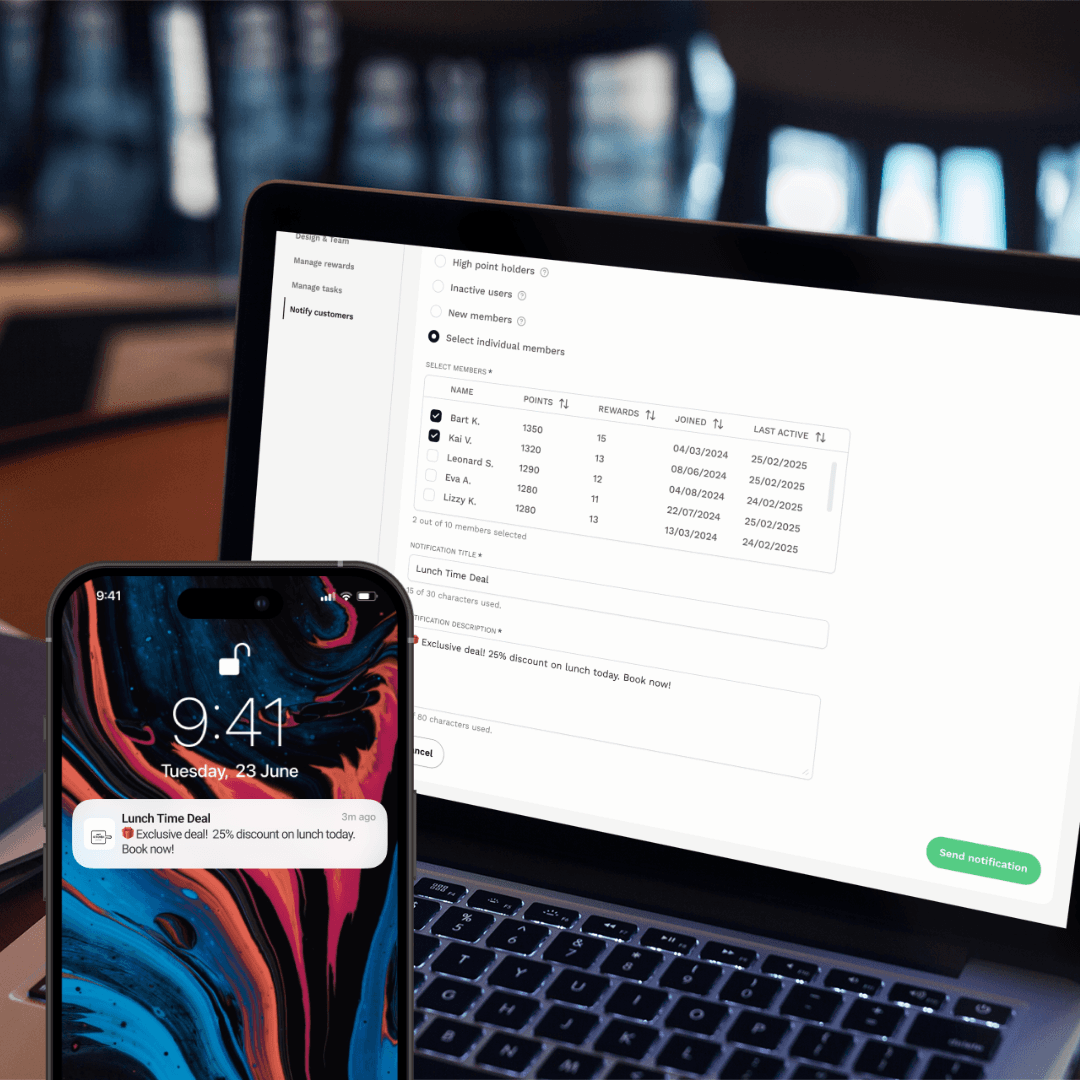
Trigger timely nudges with notifications when RFM or recency signals risk, and A/B test rewards to improve redemption and margin.
Capture feedback by linking lightweight surveys to your app journey to complement behavioral KPIs with NPS or CSAT.
FAQs
What are the KPIs for customer loyalty?
The core set includes NPS, retention rate, churn rate, repeat purchase rate or visit frequency, CLV, RFM segmentation, engagement rate and offer redemption rate. Use a mix to see both attitude and behavior.
What is the key indicator of customer loyalty?
NPS is the most cited single indicator because it measures advocacy intent. For realized loyalty, retention or churn over time is the strongest proof. Most brands track both to get a complete picture.
How do you measure customer loyalty?
Combine survey signals like NPS or CSAT with behavioral metrics such as retention, frequency and CLV. Track by cohort, location and segment, then run targeted actions and validate impact over time.
What is the best KPI for measuring customer satisfaction?
CSAT is best for satisfaction with a recent experience. If you want to reduce friction that harms loyalty, add CES to measure effort. Pair them with behavioral KPIs to confirm actual habit change.

Founder & CEO
Founder & CEO of Authic. Wouter helps businesses build lasting customer relationships through branded loyalty apps that drive engagement, repeat visits, and growth.

Continue reading



We provide the technology and simplicity to turn customers into loyal fans, without the complexity or cost of building it yourself.