
Fast, no code setup
Increase sales on autopilot

Choosing between a mobile SDK and web integration for white label loyalty affects far more than implementation style. It shapes how your loyalty experience feels to customers, how fast your team can launch, how easily you can connect bookings, purchases and check-ins, and how much control you keep over your roadmap. If you are comparing mobile SDK vs web integration for white label loyalty, the right answer depends on your existing product, your technical resources, and the role loyalty should play in your customer journey.
In practice, most brands are not choosing between "mobile" and "web" in the abstract. They are choosing between embedding loyalty inside an existing mobile app, connecting loyalty to a website or operational systems, or launching a standalone branded white-label loyalty app. That is why the real evaluation should focus on user experience, integration depth, maintenance effort, omnichannel data flow, and speed to value.
What mobile SDK and web integration mean in white label loyalty
A mobile SDK is a software development kit that lets your developers embed loyalty features inside an existing iOS or Android app. Instead of building points balances, rewards, member status, referrals, or in-app loyalty screens from scratch, your team uses prebuilt components, APIs, libraries, and developer tools to add loyalty to the mobile product you already have.
Web integration is broader. It usually means connecting a white label loyalty platform to your website, webshop, booking flow, POS, CRM, customer data platform, or email tooling through APIs, webhooks, scripts, or headless components. In some setups, loyalty is surfaced in a customer portal or browser-based experience. In others, the web layer mainly handles data exchange while the customer experience lives in a branded app.
For white label loyalty, the distinction matters because the loyalty engine, reward logic, and data model may stay the same while the delivery layer changes. The customer can interact through a mobile app, a web portal, a booking journey, a checkout flow, or a combination of all of them.
Mobile SDK vs web integration - the core difference
The simplest way to understand the difference is this: a mobile SDK is usually chosen when loyalty needs to live inside an existing mobile app experience, while web integration is chosen when loyalty must connect quickly to web-based journeys and operational systems.
Mobile SDK: best when you already have an app and want loyalty to feel native inside it.
Web integration: best when you want loyalty tied to websites, bookings, ecommerce, POS, or CRM without heavy mobile development.
Standalone white label app: best when you want a branded mobile loyalty experience without building your own app stack from scratch.
This is also where many teams confuse the question "What is the difference between mobile SDK and Web SDK?" with the broader loyalty decision. In white label loyalty, the decision is usually not just SDK versus SDK. It is about where the loyalty experience should live, which systems trigger rewards, and how much custom product work your team wants to take on.
When a mobile SDK makes sense for white label loyalty
A mobile SDK is usually the stronger option when your app is already central to the customer relationship. If customers regularly use your app to book, buy, check in, manage memberships, or receive notifications, embedding loyalty there can create a smoother experience than sending them to a separate web environment.
It is especially useful when loyalty needs to feel like a native part of the product, such as showing real-time points after a purchase, triggering rewards after check-ins, displaying progress toward tiers, or personalizing app content based on loyalty status. In those cases, an SDK can reduce duplicate work and improve consistency across screens.
A mobile SDK can also be a strong fit when you need tighter in-app behavior such as:
native navigation and screen transitions
in-app push journeys tied to loyalty events
deeper use of authenticated member sessions
feature gating based on status or membership tier
real-time loyalty visibility in the main customer app
The trade-off is that SDK-based delivery usually assumes you have an app team, release cycles, QA processes, and the capacity to maintain app integrations over time.
When web integration makes more sense
Web integration is often the better choice when loyalty needs to connect quickly to the systems that already run your business. If bookings, purchases, check-ins, appointments, orders, or customer profiles live in web-based tools, then loyalty can often launch faster through APIs and webhooks than through a mobile-first build.
This approach is common for brands that want to reward customer behavior across multiple channels without forcing every interaction into a native app. For example, a hospitality brand may want points from bookings and visits, a beauty brand may want rewards tied to appointments and repeat purchases, and a sports brand may want check-ins, class bookings, and membership actions to trigger benefits automatically.
Web integration is also practical when your priorities are:
faster implementation with less mobile engineering
connecting loyalty to POS, ecommerce, booking, and CRM systems
capturing customer events from multiple channels
supporting a headless or modular architecture
starting with loyalty before deciding whether a deeper app experience is needed
For many companies, this is the shortest path to an operational loyalty program because the core challenge is not app UI. It is reliable event tracking and reward automation across the systems they already use.
Side-by-side comparison: mobile SDK vs web integration for white label loyalty
Criteria | Mobile SDK | Web Integration
|
|---|---|---|
User experience | More native inside an existing mobile app | Often broader across web and operational touchpoints |
Best fit | Brands with an active mobile app and app team | Brands connecting loyalty to website, booking, ecommerce, POS, or CRM |
Speed to launch | Depends on app releases and QA cycles | Often faster if APIs and webhooks are already available |
Engineering effort | Higher on mobile implementation and maintenance | Higher on systems integration, usually lower on app delivery |
Data activation | Strong for in-app behavior and personalization | Strong for omnichannel event collection and automation |
Dependency on app store cycles | Yes | Usually less dependent |
POS and booking connectivity | Possible, but often not the main reason to choose it | Usually a central reason to choose it |
Standalone option | No, it lives in your app | Can support web journeys or feed a separate branded app |
User experience trade-offs you should not ignore
The most common reason teams prefer a mobile SDK is experience quality. Loyalty can feel embedded rather than bolted on. A member opens the app, sees points, rewards, status, progress, and personalized offers in the same environment where they already browse, buy, or book. That reduces friction and can improve engagement if the app already has strong usage.
But a polished experience only matters if customers actually use the app. If your audience mainly interacts through web bookings, in-store check-ins, email, or ecommerce flows, then a beautifully integrated SDK may not generate more value than a solid web integration that connects loyalty to real customer behavior.
This is where many loyalty projects go wrong. They optimize for interface before they optimize for event capture. For white label loyalty, the best experience is not always the most custom one. It is often the one that makes rewards visible, timely, and easy to redeem across the channels customers already use.
Integration depth matters more than interface alone
Whether you choose mobile SDK or web integration, the success of white label loyalty depends on how deeply the platform connects to your operational stack. Loyalty only works well when bookings, purchases, visits, referrals, or membership actions trigger the right reward logic in real time or near real time.
That means your evaluation should include more than front-end delivery. Look at:
how purchases are tracked
whether bookings and check-ins can trigger points automatically
how customer identities are matched across systems
whether rewards can be issued without manual work
how status, wallet, and communications stay in sync
If those foundations are weak, even the best mobile interface will feel unreliable. On the other hand, strong API and webhook infrastructure can make a web integration highly effective, even before you invest in a deeper mobile layer.
How white label loyalty typically connects to your stack
Most modern white label loyalty platforms are not single-channel tools. They act as a loyalty engine that can sit between multiple customer touchpoints and business systems. That is why API-first architecture is so important in this category.
A typical setup can include integrations with:
booking tools
ecommerce platforms
POS systems
CRM or customer management systems
email marketing tools
customer data platforms
websites and member portals
mobile apps
In that model, web integration is often the backbone for data flow, while mobile can be either a standalone branded app or an embedded app experience. This is one reason the "web development or mobile development" framing is too narrow for loyalty. You are really designing a connected loyalty architecture.
Decision framework: which model fits your situation?
Choose a mobile SDK if
you already have a widely used mobile app
loyalty should be part of the core in-app journey
your team can support mobile releases and QA
you need native-feeling loyalty screens and in-app personalization
app engagement is already strong enough to justify deeper integration
Choose web integration if
your customer interactions mainly happen on web, POS, or booking flows
you want to launch faster with less mobile development effort
loyalty value depends on connecting many systems, not one app
you need flexible headless delivery across channels
you want to prove program performance before investing in heavier app work
Choose a standalone branded loyalty app if
you want a dedicated mobile loyalty touchpoint under your own brand
you do not want to build and maintain the app yourself
you still need the app to connect to bookings, ecommerce, POS, or CRM
speed to market matters more than fully custom app development
What is the difference between white label and SDK?
This question comes up often, but the two terms are not direct alternatives. White label describes branding and ownership of the customer-facing experience. An SDK describes a technical delivery method for embedding functionality into an app.
You can have white label loyalty delivered in different ways:
as a standalone branded app
through APIs and web integration
through a mobile SDK embedded in your existing app
So the real comparison is not white label versus SDK. It is how a white-label loyalty platform works in practice through different implementation models.
Build, maintenance, and team requirements
A mobile SDK can reduce the need to build loyalty features from zero, but it does not remove the need for mobile development. Your team still has to implement screens, manage app releases, test on devices, monitor performance, and maintain compatibility over time. If your engineering bandwidth is limited, that can slow down rollout.
Web integration usually shifts the effort toward APIs, event mapping, system connections, and workflow validation. That tends to be easier for companies whose digital team is more web-focused than app-focused. It also makes it easier to improve loyalty logic without waiting on app store review cycles for every front-end change.
This is why implementation choice is closely tied to operating model. The best technical route is the one your team can support consistently, not just the one that looks strongest on a feature checklist.
Data, scale, and omnichannel loyalty
For white label loyalty, data architecture matters as much as the customer interface. The platform must support transaction events, profile updates, reward issuance, segmentation, communications, and reporting across channels. If your brand has multiple locations, multiple purchase channels, or multiple customer touchpoints, loyalty should not become another silo.
That is one reason web integration often plays a critical role, even when mobile is central. APIs and webhooks make it easier to unify data from ecommerce, booking systems, POS, and CRM, then push that value into the branded loyalty experience. A strong loyalty API setup should let you reward behavior wherever it happens, not only where the UI is easiest to build.
Where Authic fits in this decision
For teams evaluating options in this category, Authic is best understood as a white label loyalty platform with two clear strengths: a branded mobile loyalty app and API-first integration with existing systems. Based on publicly available product information, Authic clearly supports a standalone white label app and loyalty integrations through APIs, REST API, webhooks, and headless delivery.
That means Authic is especially relevant if you want to:
launch a branded loyalty app without building it yourself
connect loyalty to bookings, purchases, and check-ins
integrate loyalty with booking tools, ecommerce, POS, CRM, email marketing, or customer data systems
manage loyalty through a modular, API-first setup
It would be inaccurate to present Authic as offering a publicly confirmed mobile SDK if that is not explicitly documented. A safer and more useful comparison is branded app delivery versus web or API integration. For many brands, that is the practical decision anyway.
Recommended approach for most white label loyalty projects
If you are early in your loyalty rollout, start by identifying the behaviors that must trigger value: bookings, purchases, visits, referrals, memberships, or check-ins. Then map where those events live today. If they mainly live in web-based and operational tools, a web integration or API-led model is usually the more efficient first step.
If your app is already a high-frequency channel and loyalty should strengthen in-app retention, then a mobile SDK can be the better long-term fit. If you want a branded mobile destination without taking on custom app development, a standalone white label app can offer the fastest balance of brand control, mobile presence, and operational simplicity.
In other words, do not start with the delivery method. Start with the customer journey and the source of truth for customer behavior. The right integration model becomes much clearer after that. For next steps, a white-label loyalty platform implementation guide can help translate that decision into rollout planning.
FAQ
What is the difference between mobile SDK and Web SDK?
A mobile SDK is built for native mobile apps such as iOS and Android. A Web SDK is built for browser-based environments and websites. In white label loyalty, the bigger question is usually whether loyalty should live inside an app, on the web, or across both through APIs and headless integrations.
Which is better for white label loyalty: mobile SDK or web integration?
Neither is always better. A mobile SDK is stronger when you already have an app with active usage and want loyalty embedded natively. Web integration is stronger when you need faster rollout and deeper connectivity with bookings, ecommerce, POS, CRM, or other web-based systems.
What is the difference between white label and SDK?
White label refers to delivering the loyalty experience under your own brand. An SDK is a technical method for embedding loyalty features into an app. A white label loyalty solution can be delivered through a standalone app, APIs, web integration, or an SDK-based setup.
Can web integration still support a mobile loyalty experience?
Yes. In many architectures, web integration and APIs handle the event flow, customer data, and reward logic, while the customer-facing experience appears in a branded app or mobile-friendly portal. The back-end integration model and the customer interface do not have to be the same thing.
Is a standalone branded app better than embedding loyalty in an existing app?
It depends on adoption. If you already have a well-used app, embedding loyalty can reduce friction. If you do not want to build and maintain a custom app yourself, a standalone branded loyalty app can be a faster and more practical route.
What should I evaluate besides front-end delivery?
Look closely at event tracking, POS and booking integration, customer identity matching, reward automation, CRM connectivity, reporting, GDPR handling, and how easily the platform supports future channels. Loyalty performance depends on system connectivity as much as interface design. It is also worth understanding white-label loyalty platform vs custom-built options before committing to a long-term architecture.
Can a loyalty platform work without a mobile SDK?
Absolutely. Many effective loyalty programs run through branded apps, websites, web portals, POS connections, and API-led architectures without relying on a mobile SDK. The best setup depends on where your customers engage and where your business data lives. As you evaluate vendors, consider how to choose a white-label loyalty provider based on both technical fit and rollout needs.

Founder & CEO
Founder & CEO of Authic. Wouter helps businesses build lasting customer relationships through branded loyalty apps that drive engagement, repeat visits, and growth.

Continue reading



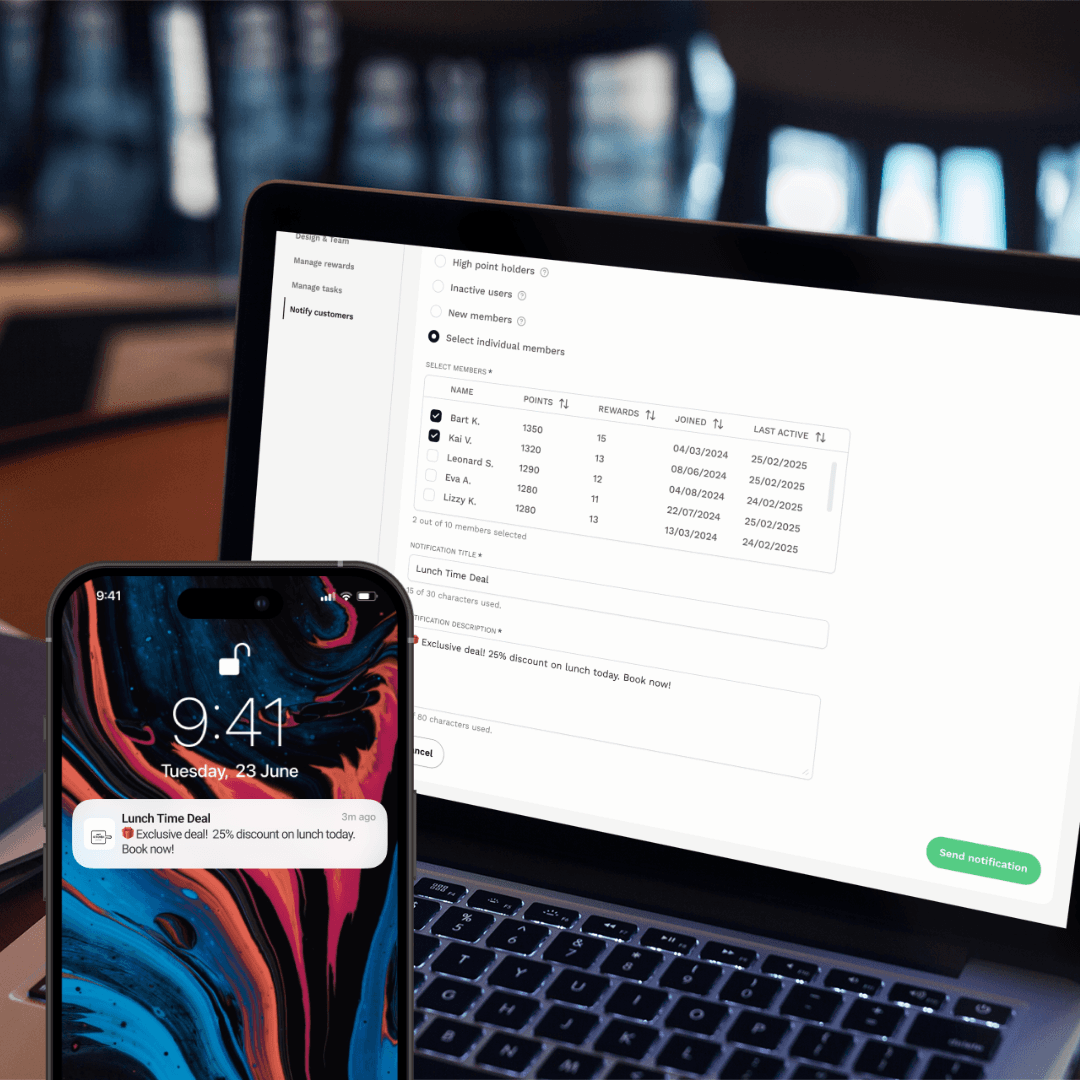
We provide the technology and simplicity to turn customers into loyal fans, without the complexity or cost of building it yourself.